










The Audiophile’s Lifeline: A Guide to IEM Connectors and Cables
It used to be a tragedy: you catch your headphone cable on a doorknob, it snaps, and your expensive headphones are trash. Today, in the world of In-Ear Monitors (IEMs), a broken cable isn't the end — it’s an opportunity.
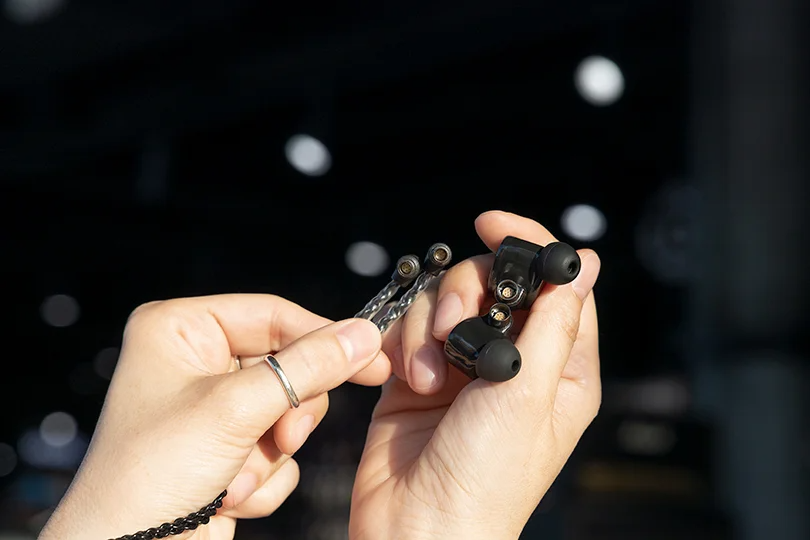
Detachable cables changed the game. They allow you to repair your gear instantly, but more importantly, they let you upgrade. You can turn wired monitors into wireless ones, change the sound signature with custom copper/silver blends, or switch to a "Balanced" connection for more power.
But there is a catch: not all plugs are the same. Before you buy that fancy upgrade cable, you need to know the difference between MMCX, 2-pin, and their more exotic alternatives. Let’s decode the connectors.
Contents
Why Swap the Cable? The 3 Upgrades
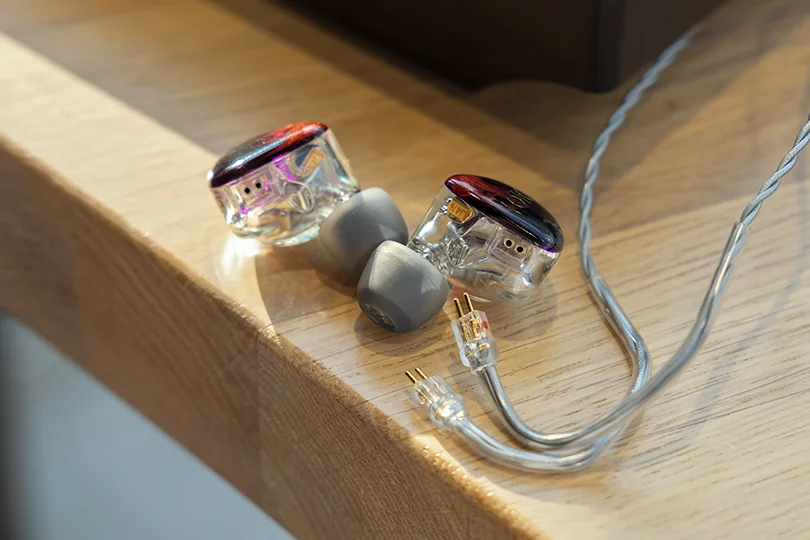
It’s not just about repairs: changing the cable changes the experience.
Go Wireless (Bluetooth Modules)
Love the sound of your $1000 wired IEMs, but hate wires at the gym? You can buy a Bluetooth adapter (like a neckband or TWS hooks) that plugs directly into your IEMs. This way, you get the comfort of wireless with the driver quality of professional monitors.
The "Balanced" Upgrade
Standard headphones use the classic 3.5mm jack (aka Unbalanced), while high-end players (DAPs) often have 2.5mm or 4.4mm Balanced outputs.
Get yourself some Balanced cables, and they’ll duplicate the signal and eliminate interference. The result is a louder sound, a cleaner background with no hiss, and a wider soundstage.
Customization
Cables come in different materials and aesthetics. Why would you want to switch between them? Because while copper adds warmth, silver adds sparkle — and you add that additional customization to your sound that you’ve been craving ever since you became a true audiophile.
The Standard: 2-Pin Connectors
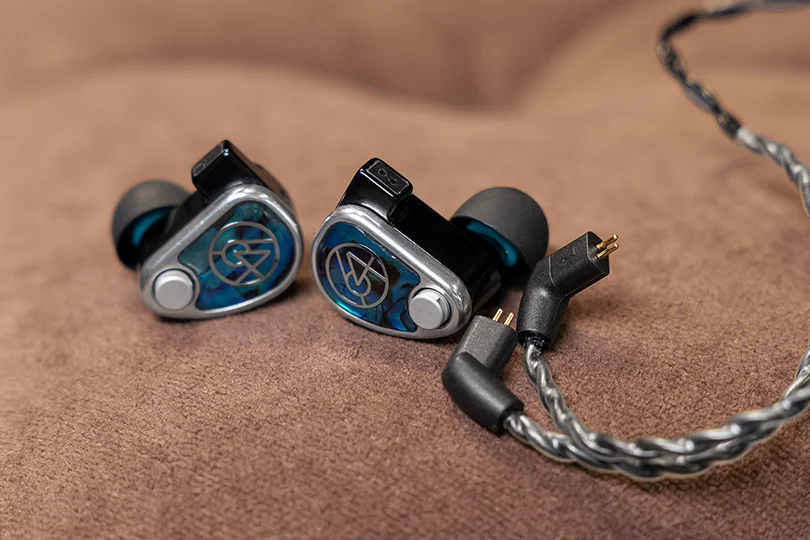
This is the "old reliable" of the industry. It’s a simple plug with two straight pins.
- Who uses it: 64 Audio, Noble Audio, Empire Ears, Moondrop, etc.
- The Design: It’s a friction fit — you push the two pins into the socket.
Pros
- Extremely stable connection
- No moving parts to wear out
Cons
- No rotation: the cable angle is fixed
- If you aren't careful, you can bend the pins
- Polarity matters — if you plug it in backward, the sound phase will be wrong
The Swivel: MMCX Connectors
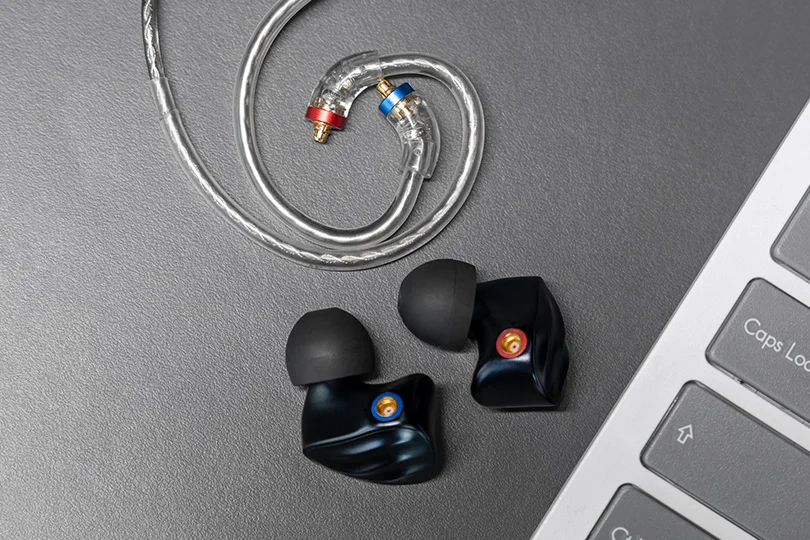
MMCX (aka Micro-Miniature Coaxial) looks like a tiny snap-button.
- Who uses it: Shure, Sennheiser, Campfire Audio, FiiO, etc.
- The Design: It snaps into place with a satisfying click.
Pros
- The cable can rotate 360 degrees, making it easier to adjust the wire over your ear for comfort
- Impossible to plug in "backward" (polarity is automatic)
Cons
- The swivel mechanism can wear out over the years, leading to the signal cutting out when you move your head
- Can be very hard to detach (watch your fingernails!)
2-Pin vs. MMCX: Which Is Better?
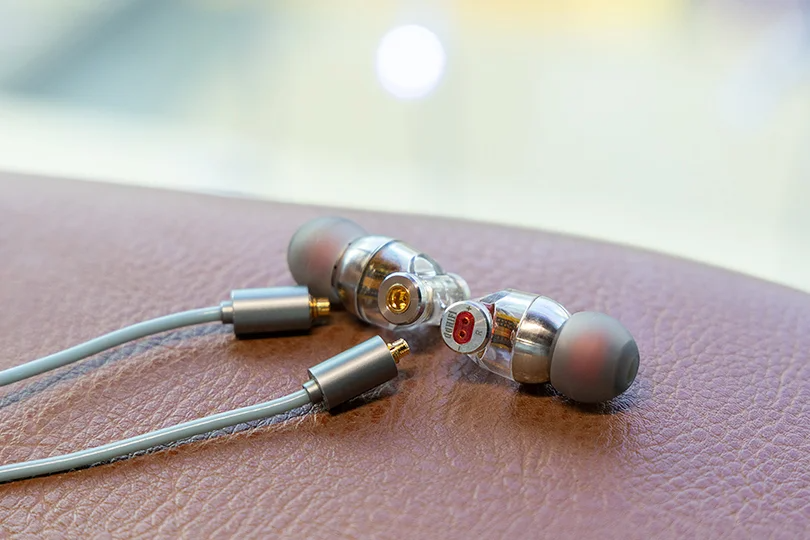
If you are choosing between two IEMs based on the connector:
- Choose 2-Pin if: You plan to change cables frequently. It is generally more robust in the long run because there is no complex mechanism to fail.
- Choose MMCX if: Comfort is your #1 priority. The ability to rotate the cable helps fit the wire perfectly behind your ear.
Pro Tip: If you have an MMCX cable but 2-pin headphones (or vice versa), you don't need a new cable. You can buy tiny adapters at Dr.Head to convert one to the other with no extra hassle.
The Exotic League
Top-tier brands often invent their own connectors to solve specific problems — here are some of the most prominent “exotics.”
IPX (Ultimate Ears / Estron)
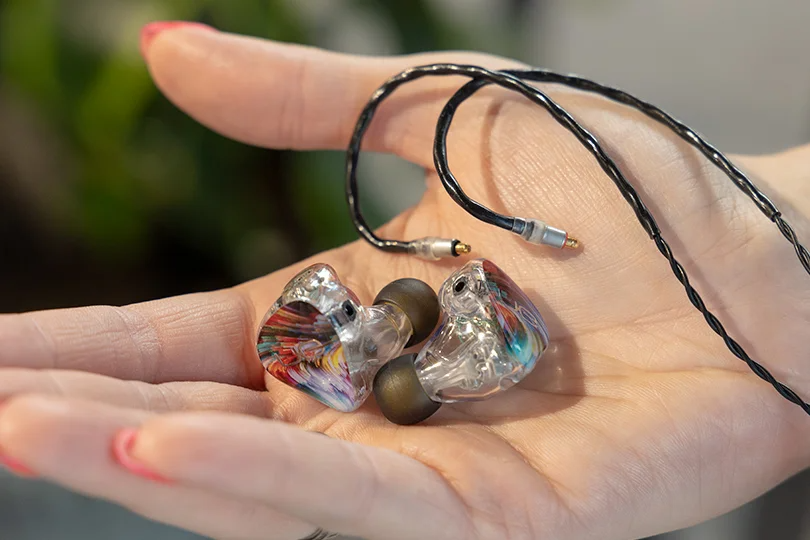
Designed for pros on sweaty stages: it is waterproof (IP67) and extremely tiny. Its main purpose is to solve the corrosion issues of standard connectors.
7-Pin (JH Audio)
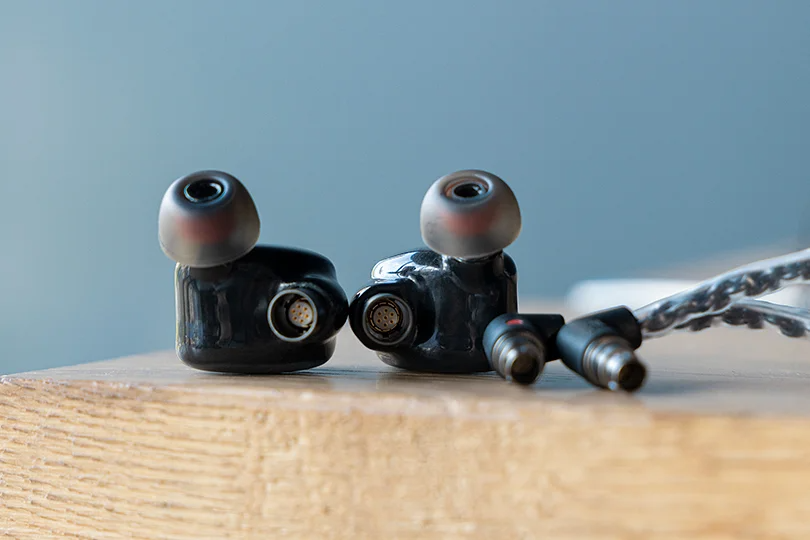
Created by Jerry Harvey for touring rock stars. It is military-grade, screw-locking, and allows for a "Bass Attenuator" on the cable itself to adjust low frequencies on the fly.
RCX (FiR Audio)
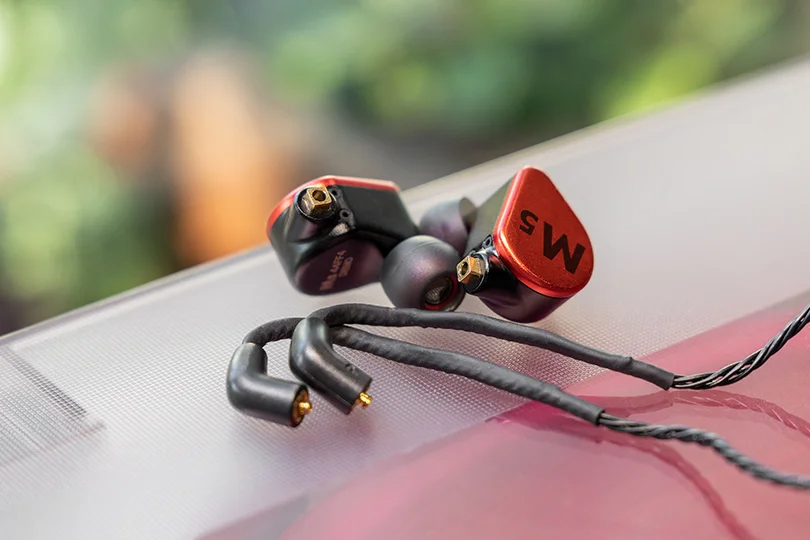
A rigid, rectangular connector. It combines the snap of MMCX with the stability of 2-pin. It’s rated for 5000+ connections, making it the most durable option on the market.
The Verdict
The cable is the lifeline of your audio. Whether you stick with the classic 2-pin or enjoy the freedom of MMCX, knowing your connection type is the first step to upgrading your portable audio game.
Check your current IEMs. Are they loose? Do you want to go Balanced? Do you need an adapter, a Bluetooth module, or anything else to make your tiny headphones truly yours? Come to the Dr.Head showroom in Dubai, and we’ll help you find the perfect match for your monitors in no time.
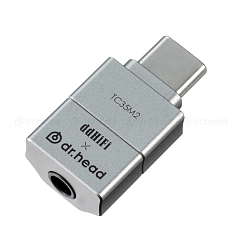
Connector (left): 3.5mm jack female, USB-C
Connector (right): 3.5mm jack female, USB-C
Brand: ddHiFi
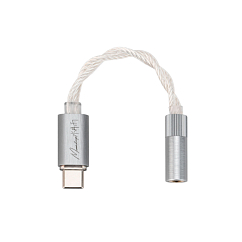
Braid material: PVC
Cable type: twisted Y-shaped
Conductor material: copper

Braid material: fabric
Cable length, m: 0.9
Cable type: straight

Cable length, m: 0.08
Cable type: straight
Brand: ddHiFi
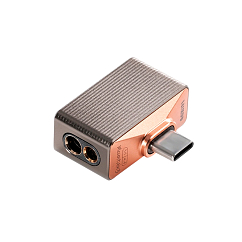
Connector (left): 3.5mm jack female
Connector (right): 4.4mm jack female
Brand: ddHiFi

Braid material: PVC
Cable type: twisted Y-shaped
Conductor material: copper

Cable length, m: 0.1
Conductor material: copper
Connector (left): 3.5mm jack female, Lightning


Conductor material: copper
Connector (left): USB-C, 4.4mm jack male
Connector (right): USB-C, 4.4mm jack male

Conductor material: copper, silver
Material: metal, PVC
Braid material: PVC

Braid material: PVC
Cable length, m: 0.65
Cable type: straight

Cable type: straight
Connector (left): USB-C, 4.4mm jack male
Connector (right): USB-C, 4.4mm jack male