













DSP 101: What It Is and How It Transforms Your Audio
DSP stands for Digital Signal Processor. Think of it as a brilliant, invisible sound engineer living right inside your audio gear. Instead of simply passing a signal from point A to point B, a DSP intercepts the sound, analyzes it, and instantly enhances it. It strips away unwanted noise, flattens uneven frequencies, and protects your speakers from blowing out.
A DSP module is not a basic microchip; it is a dedicated system that executes heavy audio-processing tasks that would choke a standard CPU. Today, you will find a DSP in almost everything: active speakers, soundbars, home theater receivers, car audio systems, studio mixers, and especially in modern wireless headphones. Simply put, the more premium and "smart" your device is, the more likely it is to rely on a powerful DSP.
Contents
Why Do We Need DSP in Audio?
Let’s be honest: sound is rarely perfect right out of the box. Your living room adds muddy echoes, speaker drivers naturally have physical imperfections, and cranking the volume on a heavy bass track can physically damage acoustic membranes. A DSP solves these hardware and environmental issues automatically.
Here is exactly what it tackles:
- Fixing Room Acoustics: A DSP analyzes how sound bounces off your walls and furniture, actively compensating for unwanted resonance. The result? Bass stops booming, and vocals become crystal clear.
- Bulletproofing Your Drivers: The processor constantly monitors the electrical load. If a signal is too powerful, it acts as a digital brick wall, preventing the membrane from tearing. This is absolutely crucial for pushing massive volume out of tiny portable Bluetooth speakers.
- Flattening the Sound: Built-in digital equalizers iron out the harsh frequency peaks and muddy dips inherent to physical speaker systems, delivering a perfectly balanced, smooth sound signature.
- Killing Noise: A good DSP can distinguish between the music you want to hear and the noise you don't, actively suppressing everything from amplifier hiss to the low hum of an air conditioner.
How It Works: Step-by-Step

A DSP processes audio like a high-speed conveyor belt, refining the signal at every stage.
- Step 1: Signal Ingestion
The DSP receives a digital signal (from a PC or smartphone) or an analog one (from a microphone or turntable). If it is analog, a built-in ADC (Analog-to-Digital Converter) instantly translates it into digital code. - Step 2: The Digital Magic
This is where the heavy lifting happens. The DSP applies EQ filters, phase correction, and spatial effects all at once. Because it "sees" every single frequency independently, it can surgically alter the sound in fractions of a millisecond. - Step 3: Back to Reality
The perfectly polished digital signal is sent through a DAC, pushed to the amplifier, and finally blasted out of your speakers.
This entire chain takes between 1–5 milliseconds. This latency is completely imperceptible when listening to music. However, for competitive gaming or live studio recording, even a micro-delay can be disruptive, which is why processing power is so critical.
What DSP Actually Does For You
Modern DSPs are packed with features. Here is what they are actually doing behind the scenes:
- EQ and Filtering: Slicing away harsh treble in budget headphones or digitally boosting the low-end in compact bookshelf speakers.
- Smart Crossovers: Flawlessly directing traffic. It sends the deep sub-bass strictly to your subwoofer, the mids to the main drivers, and the highs to the tweeters, ensuring no driver works outside its comfort zone.
- Time Alignment: Delaying the sound from specific speakers by milliseconds so that the audio from a complex home theater setup hits your ears at the same moment.
- Limiters and Compressors: Taming explosive volume spikes (so action movies don't blow your eardrums) while boosting whispers so you don't need subtitles.
- Spatial Audio: Using psychoacoustics to trick your brain into hearing full multi-channel surround sound out of a standard pair of stereo headphones.
DSP in the Living Room: Speakers and Receivers
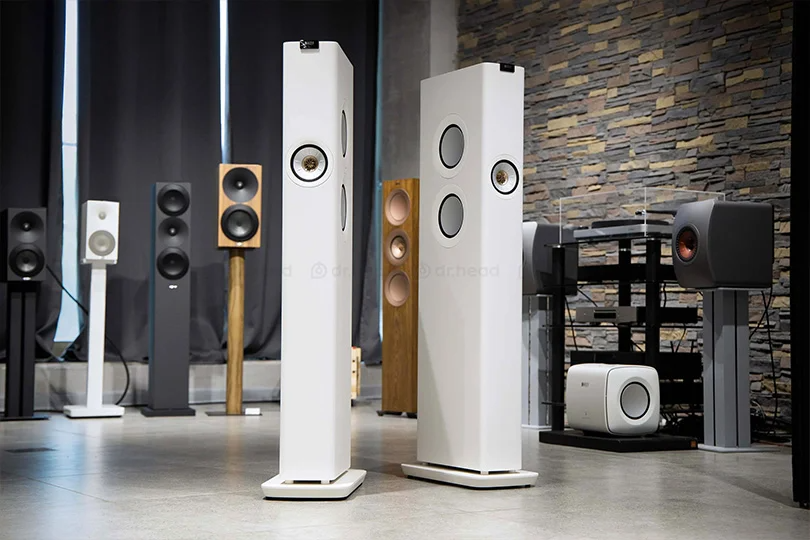
In home audio, the DSP acts as a bespoke tuning tool. Every speaker sounds slightly different depending on its enclosure, but a DSP flattens the frequency response curve to make it sound as natural as possible. It also handles room calibration.
Using an external microphone, the processor maps your room. If your sofa is swallowing all the treble, the DSP will boost the highs. If your speaker is jammed in a corner, it will cut the muddy bass frequencies. When you click on the "Movie," "Music," or "Game" presets on your soundbar, that isn't just a marketing gimmick — the DSP is fundamentally rewriting how the drivers behave to match the content.
DSP on the Go: Headphones and Headsets
Processors work overtime in wireless headphones because they have to manage your music while simultaneously fighting the outside world.
- Active Noise Cancellation: The outward-facing microphones capture the drone of a jet engine, and the DSP instantly generates a precise anti-phase sound wave to cancel it out before it reaches your eardrum.
- Transparency Mode: The exact opposite of ANC. The DSP filters out the annoying rumble of the street but amplifies human voices and sirens, piping them directly into your ears so you remain aware of your surroundings.
- Call Processing: Modern earbuds use multiple microphones. The DSP isolates the frequencies of your voice and digitally scrubs away wind noise and background chatter, ensuring the person on the other end hears you perfectly.
A word of warning: Aggressive voice processing can sometimes make you sound robotic or unnatural. The best headphones find a delicate balance between noise suppression and vocal clarity. You can always drop by the Dr.Head showroom in Dubai to test-drive different models and find the ones where the DSP works flawlessly.
DSP Specs That Actually Matter
When looking at DSP specs, don't get lost in the marketing hype.
- Sample Rate & Bit Depth: The standard 48 kHz / 24-bit is more than enough for flawless processing, even in professional studios. Insanely high numbers on a spec sheet are usually overkill — your ears simply won't hear the difference.
- Processing Headroom: This is crucial. A good DSP shouldn't stutter or choke when you turn on the EQ and ANC at the same time.
- Latency: For gamers and musicians, look for a processing delay of under 5 milliseconds.
- Software Flexibility: The best DSPs come with a companion app that lets you tweak the EQ to your liking, rather than locking you into rigid factory presets.
The Pitfalls of Using DSP
The benefits of DSP are massive: you get incredible, room-corrected sound out of highly compact, affordable gear without needing a degree in acoustic engineering.
However, there are cons.
Any digital processing inherently adds a tiny bit of latency. Furthermore, cheap, poorly coded DSP algorithms can introduce nasty digital artifacts — metallic ringing, bloated, unnatural bass, or a compressed, lifeless sound.
The biggest danger is over-processing. Manufacturers often use DSP to create a hyped, bass-heavy "wow factor" that sounds impressive for the first five minutes but quickly leads to listener fatigue. This is why true audiophiles often prefer gear that allows you to completely bypass the DSP for a raw, uncolored signal.
Busting Common DSP Myths
- "Digital processing ruins the purity of audio"
This is an outdated myth. Modern DSPs calculate audio with such extreme mathematical precision that they introduce far less distortion than vintage analog EQs. - "DSP always adds fake, echoing surround sound"
While spatial audio is a feature, a good DSP can be completely transparent, doing nothing but silently fixing the acoustic flaws of your room. - "More effects equal better sound"
The exact opposite is true. A manufacturer cramming 50 useless reverb presets into a speaker is hiding behind gimmicks. The best DSP does its job without drawing attention to itself.
The Verdict
A DSP is the ultimate tool for controlling and adapting audio. It wrings every last drop of performance out of your hardware while protecting it from damage. The key is moderation. You don't need to engage every single digital effect to get great sound. When shopping for smart audio gear, prioritize devices that offer fine-tuning through an app and, more importantly, the ability to turn the processing off entirely.