











Power vs. Loudness: Why Watts Don't Equal Volume
The single most common mistake in the audio world is confusing Power (Watts) with Loudness (Decibels). You see a party speaker at the electronics store boasting a mind-boggling 10,000W, then you look at a serious Hi-Fi amplifier rated at a "tiny" 30W. You'd assume the 10,000W box is infinitely louder, right?
Not necessarily. The truth is, these two specs measure completely different things. Understanding this difference is the key to busting marketing myths and building a great-sounding system. Let's break it down.
Contents
The Engine: What is Power?
Think of power — measured in Watts (W) — as the engine in a car. It's the amount of electrical energy an amplifier can produce or a speaker can handle. It's a measure of potential. A massive 500-horsepower engine (aka high watts) is undeniably powerful, but if you put it in a 10-ton armored truck, it won't be very fast.
The Result: What is Loudness?
Loudness — measured in Decibels (dB) — is the result you actually hear. It's the Sound Pressure Level (SPL) — in our car analogy, this is the car's actual top speed. And just like a car's speed depends on more than just the engine (like the car's weight!), a speaker's loudness depends on more than just watts.
The Secret Ingredient: Speaker Sensitivity
So, if power isn't loudness, what's the missing link? Meet Sensitivity. This is the spec marketers really don't want you to talk about.
Sensitivity (also measured in dB) tells you how loud a speaker will play with 1 watt of power, measured from 1 meteraway.
Let's go back to our car analogy. Sensitivity is the efficiency or weight of the car.
- Speaker A (High Sensitivity): 95 dB. This is a lightweight sports car. It only needs a small, clean 30W engine (amp) to go incredibly fast (loud).
- Speaker B (Low Sensitivity): 85 dB. This is that 10-ton armored truck. It needs a massive 300W engine (amp) just to get up to highway speed.
To make Speaker B (85 dB) play as loud as Speaker A (95 dB), you would need TEN TIMES the amplifier power! This is why a "tiny" 30W Hi-Fi amp paired with efficient speakers can sound far louder and cleaner than a 100W boombox with inefficient ones.


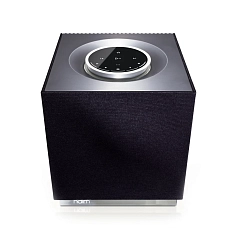

Brand: Focal
: 44
Connection method: hdmi, optical, rca, usb-a, rj45, bluetooth, wifi
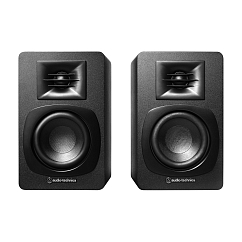
Bluetooth version: 5.3
Cable included: yes
Charging connector: DC-IN


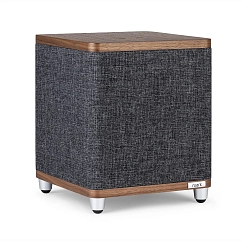
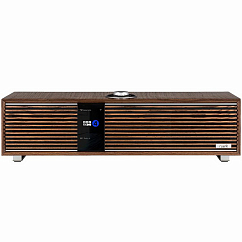
Connection method: wifi, rj45
Phase Inverter location: below
The highest frequency, kHz: 22

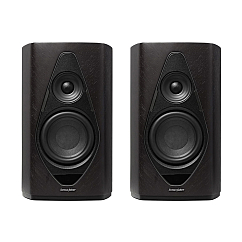
Connection method: bluetooth, wifi, rj45, hdmi
Max SPL, dB: 105
Number of lanes: two-lane

The "Watt" Showdown: RMS vs. PMPO
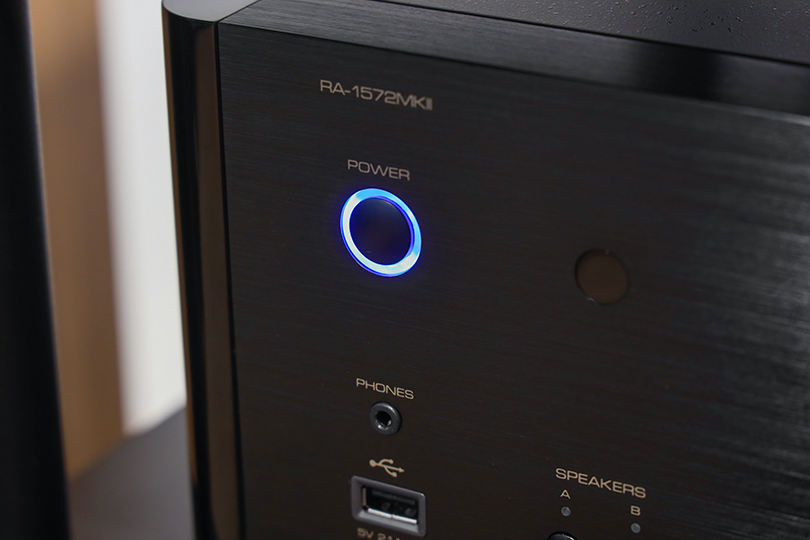
So where do those crazy 10,000W numbers come from? From a misleading (and useless) measurement standard.
- RMS (The Real Deal): This stands for "Root Mean Square" and is the only power rating that matters. Think of it as honest, continuous power. When a Hi-Fi amp is rated at "50 watts RMS," it means it can safely and cleanly deliver 50 watts of power all day long at a very low level of distortion. This is the real performance you can use.
- PMPO (The Marketing Hype): This stands for "Peak Music Power Output." It's a fantasy number. It's the absolute maximum power a speaker survived for a fraction of a second, often at a single bass frequency, before it (probably) blew up. Distortion is ignored. That 10,000W PMPO speaker might only be 10W RMS!
Rule of thumb: If you see a PMPO rating, ignore it. It's a marketing gimmick. Always look for the RMS rating.
How to Match Amps & Speakers: The Real Danger
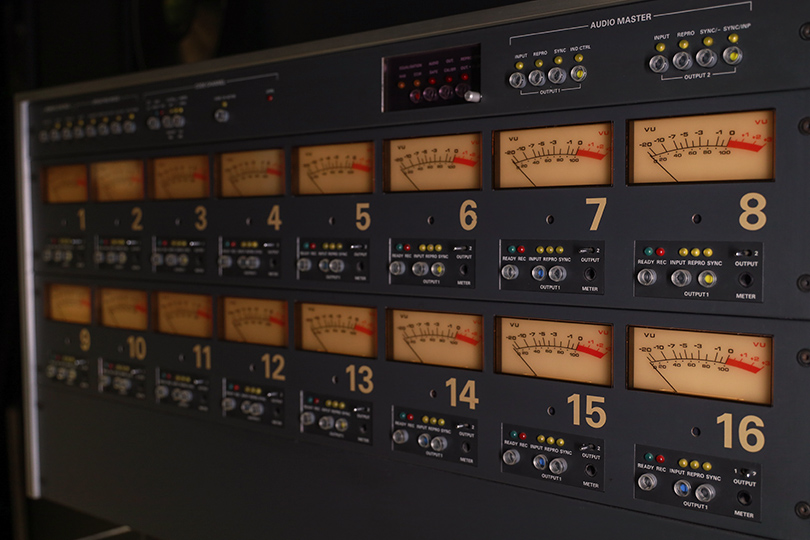
Here’s the biggest secret in audio: a weak, underpowered amplifier is FAR more dangerous to your speakers than a powerful, clean one.
This sounds backward, but it's true. Here’s why:
- You have a weak 30W amp and big 150W speakers. You want it louder, so you crank the volume to 10.
- The 30W amp can't keep up. It runs out of clean power and starts to "clip".
- Clipping sends a distorted "square wave" signal (a form of DC current) to your speaker.
- This square wave doesn't move the speaker cone; it ust sits there and heats up the voice coil like a toaster filament.
- Result: Your speaker's tweeter burns out, killed not by too much power, but by too much distortion.
A powerful, 150W amp running at 50% capacity is just cruising. It sends a perfectly clean, round signal. It has plenty of "headroom" for musical peaks and never clips.
The Golden Rule: The goal isn't to perfectly match numbers. The goal is to ensure your amplifier never has to strain itself. Always choose an amplifier with an RMS power rating that is equal to or slightly higher than your speaker's RMS rating. Don't fear power; fear distortion.
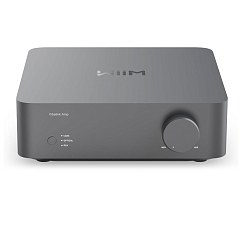
Brand: WiiM
Power per channel at 4 ohms, W: 200
Power per channel at 8 Ohm, W: 100

Brand: Naim
Power per channel at 4 ohms, W: 1450
Power per channel at 8 Ohm, W: 768

Brand: Naim
Power per channel at 4 ohms, W: 1450
Power per channel at 8 Ohm, W: 768

Brand: Naim
Power per channel at 4 ohms, W: 130
Power per channel at 8 Ohm, W: 80
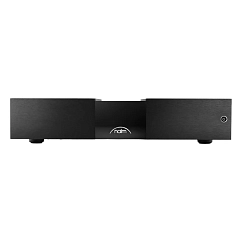
Brand: Naim
Power per channel at 4 ohms, W: 345
Power per channel at 8 Ohm, W: 175
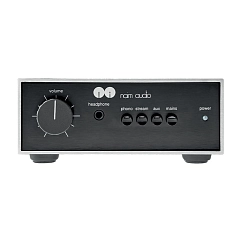
Brand: Naim
Power per channel at 4 ohms, W: 40
Power per channel at 8 Ohm, W: 25
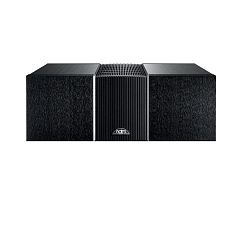

Brand: Naim
Power per channel at 4 ohms, W: 260
Power per channel at 8 Ohm, W: 150
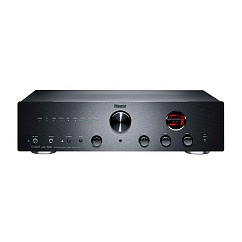
Brand: Magnat
Power per channel at 4 ohms, W: 70
Internal DAC: yes

Brand: Marantz
Power per channel at 4 ohms, W: 125
Power per channel at 8 Ohm, W: 100

Brand: Naim
Power per channel at 4 ohms, W: 800
Power per channel at 8 Ohm, W: 500
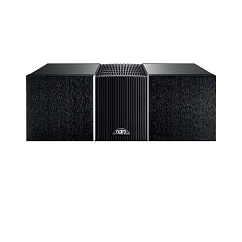
Brand: Naim
Power per channel at 8 Ohm, W: 140
Input connectors: XLR