










Reverb Explained: The Secret Sauce of Atmospheric Sound

Have you ever sung in the shower and thought, "Wow, I sound amazing"? Or spoken in an empty room and heard that weird, metallic ring? That is Reverberation, aka Reverb.
It is the sound of space itself. In the real world, it happens naturally when sound waves bounce off walls. In the studio, it is the most powerful tool for creating depth, emotion, and "glue" in a mix. Without it, recordings sound dry, flat, and unnaturally close to your ear.
Let’s break down how it works, the different types you’ll encounter, and how to use them without ruining your track.
Contents
What Actually Is Reverb?

Don't confuse Reverb with Echo (Delay).
- Echo: You shout "Hello!" into a canyon, and 2 seconds later, you hear a distinct "Hello!". It’s a repetition.
- Reverb: You clap your hands in a cathedral. You don't hear distinct claps; you hear a wash of sound that hangs in the air and slowly fades away.
It happens because thousands of sound reflections hit your ears so fast that they blur into one continuous "tail."
- Hard surfaces (tiles, glass): Create bright, long reverb (think bathroom).
- Soft surfaces (carpet, curtains): Absorb sound, creating short, dull reverb (think bedroom).
RT60: The Golden Metric
Acoustic engineers measure reverb using RT60. This is simply the time it takes for a sound to decay by 60 decibels — basically, to silence.
- 0.6 seconds: A typical office or living room. Good for speech.
- 2.0+ seconds: A concert hall. Good for orchestral music, bad for fast rap vocals (it gets muddy).
The 4 Main Types of Reverb (And When to Use Them)
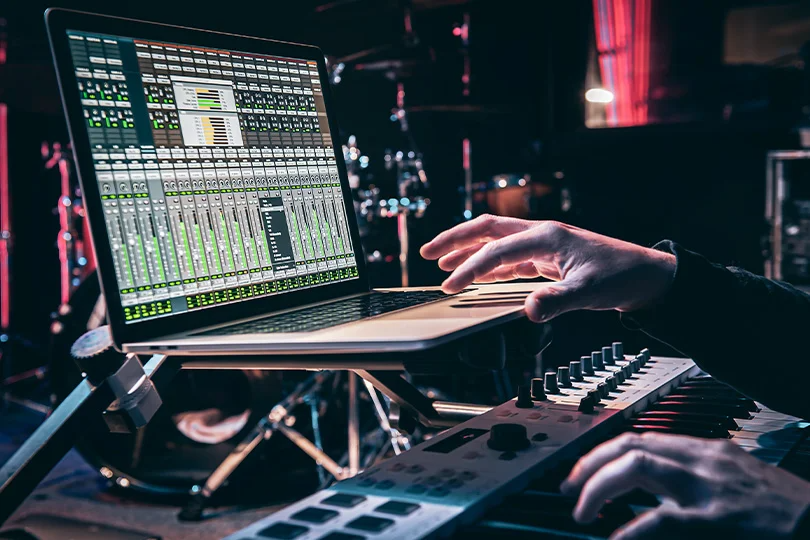
Over the decades, engineers have invented many ways to fake this natural phenomenon. We’ll go over the four main types you’ll encounter.
1. Chamber Reverb
Before digital plugins, studios built special tiled rooms called Echo Chambers with a speaker and a microphone inside. They would play the vocal into the room and record the wet sound.
- The Sound: Natural, organic, and expensive-sounding.
- Best For: Vocals and strings that need to sound "real."
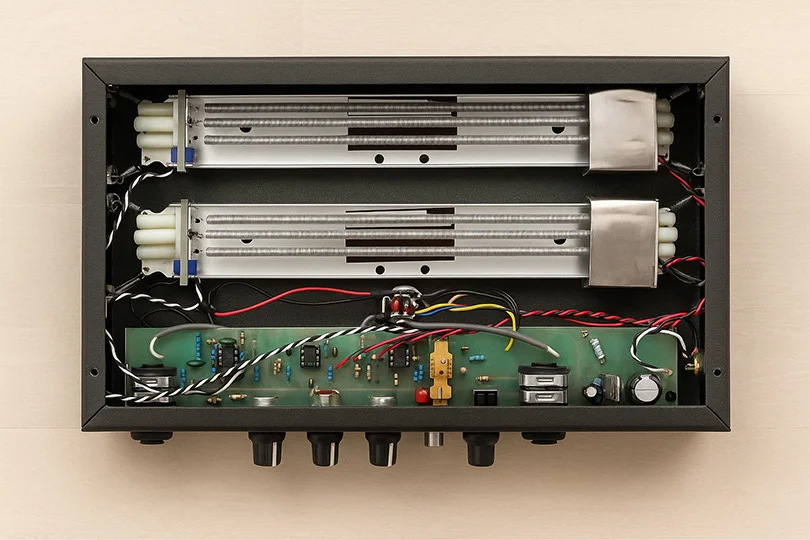
2. Spring Reverb
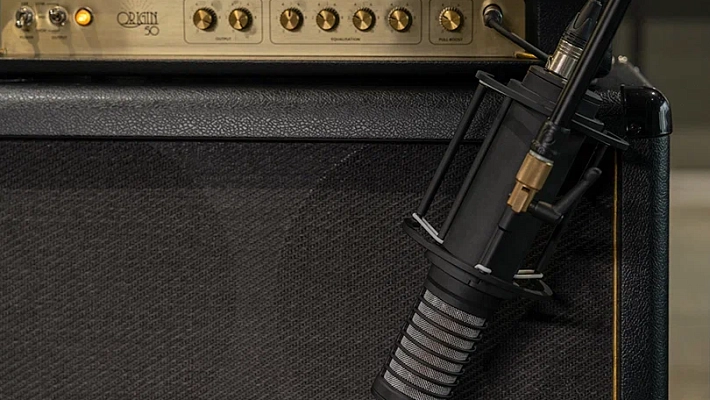
Found in almost every guitar amp from the '60s. It works by sending sound through literal metal springs.
- The Sound: Metallic, bouncy, and "boingy." It’s the signature sound of Surf Rock and early Garage Rock.
- Best For: Electric guitars and dub reggae snares. Keep in mind that it’s too dirty for vocals.
3. Plate Reverb
What happened was that engineers suspended a giant metal sheet (about 2x1 meters) in a frame and attached a transducer to vibrate it — and thus, invented plate reverb.
- The Sound: Dense, smooth, and bright. It sounds like a large space, but without the messy "boominess" of a real hall.
- Best For: Pop vocals and snare drums. It adds "shimmer" without muddying the mix.
4. Digital Reverb
Today, computer chips calculate the reflections mathematically. You can simulate anything from a broom closet to the Taj Mahal.
- The Sound: Whatever you want it to be. Pristine, clean, and totally controllable.
- Best For: Everything. Especially creating unrealistic, massive spaces for ambient music or sci-fi sound design.
How to Use Reverb Like a Pro
Reverb is like salt. A little bit makes everything better; too much ruins the dish.
1. Create Contrast
Don't drown everything. If the lead vocal is "wet" (lots of reverb), keep the bass and kick drum "dry" (no reverb). This keeps the mix punchy.
2. Use "Send" Channels
Instead of putting a reverb plugin directly on a track, create a separate "Reverb Bus." Send different instruments to this single bus. This places them all in the same virtual room, gluing the mix together.
3. Match the Genre
- Rock/Pop:Short Plate or Room reverb to make things sound big but tight.
- Jazz: Very subtle Hall reverb (or just the natural room sound).
- Ambient: Massive Digital Halls with 10-second decay times.
The Verdict
Reverb is the difference between a recording that sounds like it was made in a cardboard box and one that sounds like a hit record.
Whether you want the vintage vibe of a Spring Reverb for your guitar or the pristine clarity of a Digital Hall for your vocals, understanding space is key.
Want to hear these effects in action? Come to the Dr.Head showroom in Dubai. Test our amps, studio monitors, and software setups to find the perfect space for your sound. And let’s get your record to shine the way it deserves!