











Demystifying Ohms: A Simple Guide to Speaker Impedance
You’re shopping for new speakers, and you see those mysterious numbers on the back: 4Ω or 8Ω. This is impedance, and understanding it is crucial. Think of it as a compatibility rating between your speakers and your amplifier.
Get the match right, and you'll get glorious sound. Get it wrong, and you could end up with quiet, lifeless audio, nasty distortion, or even a fried amplifier. But don't worry, it’s much simpler than it sounds.
Contents
What is Impedance, Anyway?
In technical terms, impedance is the resistance a speaker puts up against the electrical signal from your amp. But let's not make it technical.
Imagine your amplifier is a water tap and your speaker is a garden hose.
- A low-impedance speaker (4 Ohms) is like a wide, thick hose. It puts up very little resistance, allowing a lot of "water" (electrical current) to flow through it easily. This makes the amp work hard.
- A high-impedance speaker (8 Ohms) is like a long, narrow hose. It puts up more resistance, and less water flows through. This is an easier job for the amp.
Basically, this number, measured in Ohms (Ω), tells your amplifier how "hard" it will have to work to power the speaker.
The Catch: Impedance Isn't a Fixed Number
Here’s the tricky part: a speaker’s impedance isn't constant. The number you see on the box (say, 8 Ohms) is the nominal, or average, impedance. In reality, the actual impedance fluctuates wildly depending on the frequency of the music being played.
A deep bass note might cause an 8-Ohm speaker's impedance to drop as low as 4 Ohms, demanding a huge rush of current from the amp. A high-pitched cymbal crash might cause it to spike to 30 Ohms. A good amplifier needs to be a stable powerhouse, capable of handling these dips and peaks without breaking a sweat.
The Golden Rule of Matching
This is the most important thing you need to remember. It’s all about a safe and effective partnership.
An amplifier is rated for a minimum impedance. Your speaker’s nominal impedance should NOT be lower than the amplifier's minimum rating.
Let’s translate that.
- SAFE: Connecting 8-Ohm speakers to an amp rated for 4–16 Ohms. The speaker's impedance is within the amp's safe range.
- SAFE (but quieter): Connecting 8-Ohm speakers to an amp rated for 4 Ohms. The speaker's impedance is higher than the amp's minimum. The amp will be perfectly happy, but it won't deliver its maximum power, so the sound will be quieter.
- DANGEROUS: Connecting 4-Ohm speakers to an amp only rated for 8–16 Ohms. The speaker's impedance is lower than the amp's minimum. This is like forcing the tap to push way more water than it was designed for. The amp will try to deliver too much current, leading to overheating, distortion, and potential damage.
4 Ohms vs. 8 Ohms: What's the Real Difference?
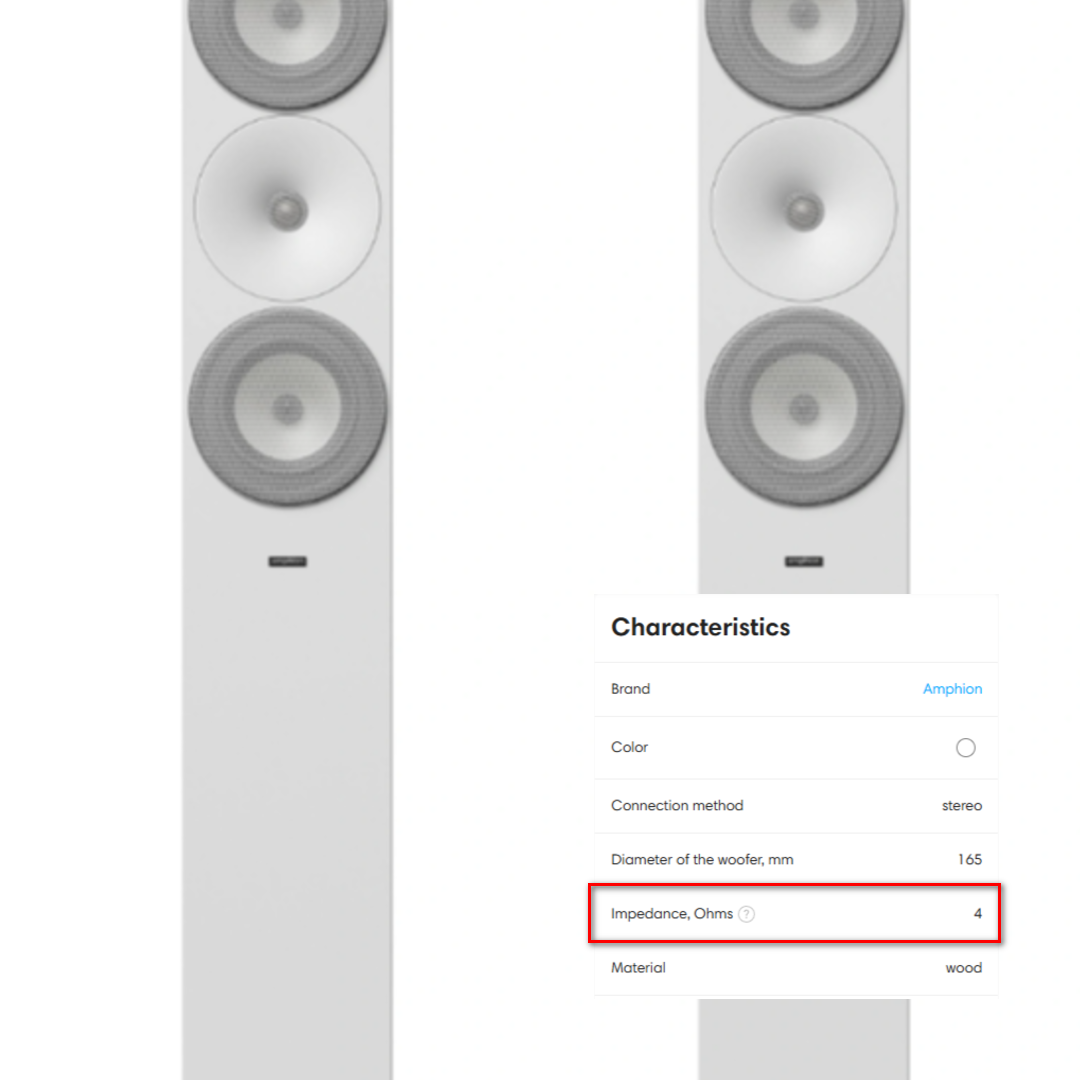
- 8-Ohm Speakers: This is the classic, universal standard for home audio. They are the "easy load," compatible with almost any amplifier, from budget models to high-end tube amps. They are the safe, reliable choice.
- 4-Ohm Speakers: Think of these as the "high-performance" option. They can draw more power from an amplifier, which often translates to higher potential volume and better bass control. However, they demand a more robust, high-current amplifier that is explicitly rated to handle a 4-Ohm load.
What Happens If You Get it Wrong?
You'll know if you have a bad match.
- If your speakers' impedance is too high for the amp (the "safe" mismatch): The sound will be quiet, thin, and lack dynamic punch. The system works, but you're not getting anywhere near its full potential.
- If your speakers' impedance is too low for the amp (the "dangerous" mismatch): Your amplifier will run unusually hot, even at low volumes. As you turn it up, the sound will start to distort, especially in the bass. In the worst-case scenario, the amp's protection circuit will kick in and shut it down, or you could permanently damage it.
The Final Word
Impedance isn't a measure of speaker quality; it's a measure of compatibility. The goal isn't to find the "best" number, but to create a stable, synergistic match between your speakers and amplifier.
Remember the golden rule: never go below your amplifier's minimum impedance rating. When in doubt, 8-Ohm speakers are the most universal and safest bet for home Hi-Fi systems.


Brand: Focal
: 44
Connection method: hdmi, optical, rca, usb-a, rj45, bluetooth, wifi
Bluetooth version: 5.3
Cable included: yes
Charging connector: DC-IN


Connection method: wifi, rj45
Phase Inverter location: below
The highest frequency, kHz: 22

Still have questions? Come visit us at the Dr. Head showroom in Dubai. We can walk you through different speaker and amplifier pairings and let you hear for yourself how a perfect match can bring your music to life.