










Choosing Professional Headphones: The Ultimate Guide
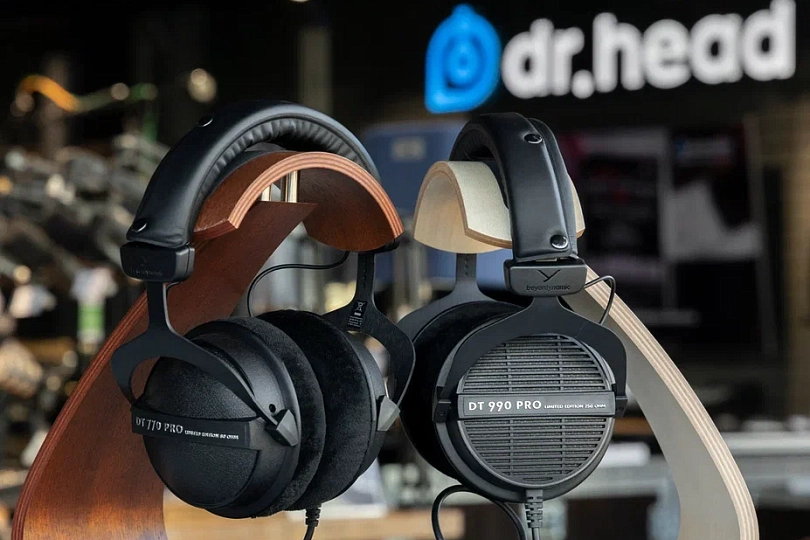
If you work with sound, professional headphones are not a luxury but an indispensable tool. A well-chosen model that consistently performs its tasks is a direct path to improving the quality and efficiency of your work. However, the set of requirements your headphones must meet will depend directly on your specific field. The needs of a studio sound engineer and a musician performing on stage will be quite different.
So the first question to ask yourself when choosing professional headphones is: Where and how do you plan to use them? Also, it’s crucial to remember that headphones are very personal, and there are no universal options that are a 100% perfect fit for everyone. The same model might be ideal for one person and completely unsuitable for another — if only because the shapes of our heads and ears are all different.
This is why specific models must be considered with many factors in mind, and why it's crucial to personally test the models that meet most of your criteria.
Contents
- What's the Difference Between Professional, Consumer, and Audiophile Headphones?
- Criteria for Choosing Professional Headphones
- Classification of Professional Headphones by Use Case
- Driver Types
- Key Technical Specifications of Professional Headphones
- Wired vs. Wireless Technologies
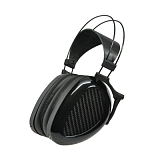
- Full-Size Studio Headphones
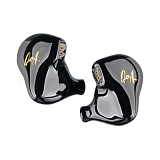
- In-Ear Monitors (IEMs)
- Custom In-Ear Monitors (CIEMs)
- Gaming Headphones
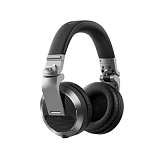
- DJ Headphones
- Final Advice
What's the Difference Between Professional, Consumer, and Audiophile Headphones?
The main distinguishing feature of professional headphones is their purpose: they are created primarily for working with sound, not for the pleasure of listening to music (though that is not excluded). Their main task is to provide quality monitoring in a wide variety of conditions and deliver a predictable result. In contrast, "audiophile" models are geared more toward the emotional experience of music, while general consumer headphones are designed for everyday use and basic comfort at a lower price point.
Criteria for Choosing Professional Headphones
When looking for headphones as a work tool, you need to clearly define the following points for yourself:
- Area of application
- Technical specifications
- Operating conditions
- Type and acoustic design
- Durability, longevity, and operational stability
- Price
- Comfort and convenience
- Presence of additional features
- Personal preferences
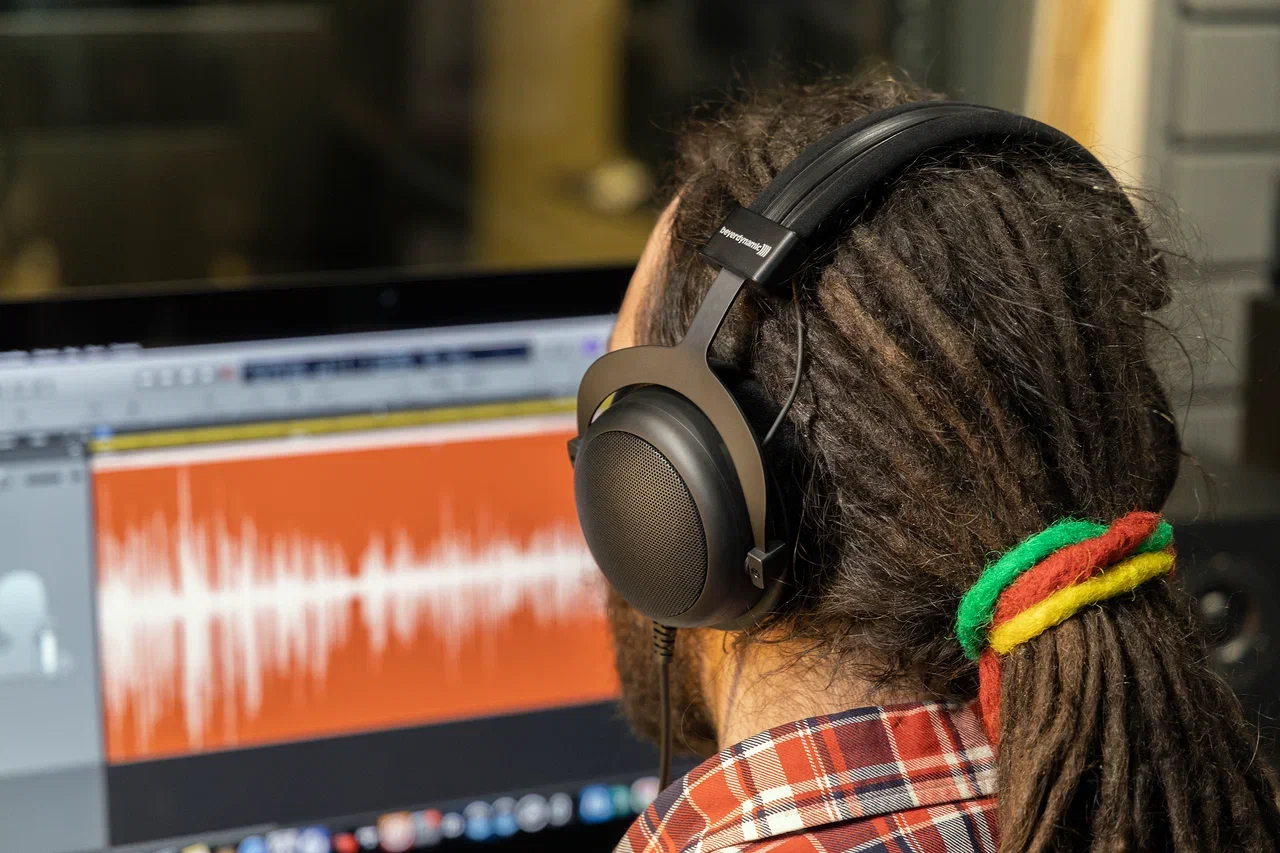
Cost is not the defining factor and should never be your only focus. High-end headphones for music listening can be prohibitively expensive but entirely unsuitable for professional work due to their sound signature. Conversely, mid-range professional models can become your indispensable assistants for many years to come. Your primary focus should always be on your specific tasks.
Classification of Professional Headphones by Use Case
Depending on the purpose and specifics of your work with sound, professional headphones can be divided into the following categories:
- Full-Size Studio Headphones: For sound engineers, sound designers, and producers working in a studio.
- Professional In-Ear Monitors (IEMs): For musicians, artists, and live sound engineers working on stage.
- Custom In-Ear Monitors (CIEMs): For musicians, sound engineers, and DJs with specific personal requirements for their in-ear monitors.
- Gaming Headphones: For professional gamers.
- DJ Headphones: For DJs and club musicians.
To illustrate, each of these headphone categories has its specific requirements. The table below provides some examples, showing which criteria overlap and which can differ significantly. Of course, this data is averaged and meant as a general guide, but it will help you form an idea of which parameters professionals in various fields should pay attention to.
| Headphone Type | Best For | Primary Tasks | Properties | Technical Specifications |
|---|---|---|---|---|
| Over-Ear | Sound Engineers Sound Designers Music Producers Studio Musicians | Monitoring during mixing and mastering Working in rooms with complex / poor acoustics Recording instruments and voice Monitoring subtle aspects of the sound | Full frequency range reproduction (20 Hz - 20 kHz) Minimal distortion of the sound image High detail and microdynamics Comfortable fit for long-term use Good isolation from external noise | Impedance: 200–600 Ω Sensitivity: >90 dB Power: >200 mW Driver Diameter: from 40 mm and larger THD: no more than 0.1% |
| Professional In-Ear | On-stage Musicians Live Sound Engineers Artists, Actors DJs | Monitoring during performances Hearing protection (reducing noise load) Monitoring while moving on stage Working in large venues | Secure fit Enhanced noise isolation Compactness Mechanical strength, reliable construction and connections | Impedance: 16–100 Ω Sensitivity: >80 dB Power: >250 mW Water Resistance: IPX4 Battery Life: at least 6 hours |
| CIEM (Custom In-Ear) | Live Sound Engineers Professional Musicians, Artists, DJs | Monitoring during performances Hearing protection (reducing noise load) Monitoring while moving on stage Working in large venues Secure fit for long, active use Maximum isolation from external noise Meeting individual needs | Custom shape Personalized sound characteristics High-fidelity sound reproduction with minimal distortion Maximum noise isolation Custom selection of parts and components, high-quality materials Personalized design | Impedance: 16–100 Ω Sensitivity: >80 dB Battery Life: at least 6 hours |
| Gaming | Professional Gamers | Accurate spatial positioning Team communication Immersion in the gameplay Comfort during multi-hour use Unique design | Built-in microphone Comfortable fit Durable construction Low signal latency (for wireless systems) | Impedance: 16–32 Ω Sensitivity: >80 dB Latency: ≤15 ms Microphone: Cardioid with noise cancellation Driver Diameter: 40 - 50 mm Battery Life: from 30 hours |
| DJ | Professional DJs Club Musicians | Mixing tracks Working with effects Monitoring the source material Controlling mixes Performing in clubs and at festivals Unique design | Ability to rotate earcups in all directions High reliability Good noise isolation Lightweight Wide dynamic range Enhanced bass and attenuated high frequencies | Impedance: 30–90 Ω Sensitivity: 105–110 dB Power: from 300 mW SPL: 120 dB and higher Noise Isolation: up to 25 dB Driver Diameter: from 40 mm for over-ear models |
Later, we will delve into the specifics of choosing headphones for each category separately. For now, we must dive into a less exciting but crucial part: the technical specifications inherent to professional headphones. To make the right choice, it's important to be able to navigate all the various terms and numbers you'll encounter in model descriptions and understand what they mean.
Driver Types
The driver is the element within the headphone that converts electrical energy into acoustic energy, directly creating sound. There are typically three main types of drivers: dynamic, balanced armature, and planar magnetic (isodynamic).
Dynamic drivers are most often used in professional headphones for studio work. They provide a wide frequency and dynamic range, as well as sufficient volume, while remaining detailed enough for objective sound monitoring. The design is very old, well-refined, and thoroughly studied, making it a de facto standard for professional full-size headphones.
For live performance, professionals typically use balanced armature drivers. They are ideal where a powerful, full-bodied sound is needed, but there is not enough space for a large driver. Since the earpiece is inserted snugly into the ear, bone conduction also begins to play a noticeable role. In-ear monitors usually house several drivers, each working within its own narrow frequency band.
Professional models with a dynamic driver can also be supplemented with balanced armature drivers, combining the advantages of both. This hybrid setup can provide an enhanced sense of bass, allowing you to feel the full power of the low frequencies as the armature drivers reproduce vibration more than they do sound pressure.
Now let's go over the main technical specifications you'll often see in product descriptions.
Key Technical Specifications of Professional Headphones
When studying technical specifications, it’s important not to look at them in isolation but to remember that they are all interconnected, and each metric affects the others. That’s why we will give you a general overview of what each parameter means, but only a deeply knowledgeable person — such as the Dr.Head experts — can help you fully assess them.
Sensitivity
Sensitivity indicates how loud the headphones will play when a specific signal power is applied. It is measured in decibels per milliwatt (dB/mW). For professional use, it is recommended to consider models with a sensitivity of no less than 90 dB — this level provides sufficient volume, which is critical when working with signals that have a large dynamic range.
But be aware that not all manufacturers adhere to strict standards when measuring sensitivity and may provide figures that are not entirely accurate (sometimes for purely marketing reasons) — so the sensitivity indicated on the box provides only an approximate idea of how loud your headphones will be. Comparing models from different manufacturers on this parameter is only a rough estimate.
Impedance
This is an important characteristic that affects volume, sound quality, and compatibility with equipment. Impedance is the total opposition to alternating current, measured in Ohms.
Typically, professional studio headphones have a high impedance and are used with specialized equipment that has a high voltage output. Properly matched impedance ensures a clean and detailed sound even with a weak input signal. Since headphones with different construction types and drivers have different power needs, the practical choice regarding impedance is as follows: the higher the headphone's impedance, the higher the voltage output of the signal source should be.
It is crucial to remember that for high-quality sound, the headphone's impedance should be higher than the amplifier's output impedance. In professional environments, high-impedance models ranging from 200 to 600 Ohms are most common.
Frequency Range
This one determines the spectrum of sound frequencies the device can reproduce. The wider the frequency range, the fuller and more detailed the sound becomes. The basic standard for professional headphones is the range from 20 to 20,000 Hz, which covers the entire audible spectrum for the human ear. Some modern models can reproduce frequencies beyond this range, but there is little practical sense in this, as they are impossible to hear. Manufacturers typically do this to improve the linearity within the effective audible range.
The table below illustrates why it is important for professionals to work with headphones that have a wide frequency range.
| Frequency Range | Frequency Band (Hz) | Professional Applications |
|---|---|---|
| Sub-bass Range | 20–50 Hz | Control of deep bass for low-frequency sound effects Adjusting sub-bass balance |
| Bass Range | 50–250 Hz | Control of sonic fullness Working with lower registers Creating a sense of foundation in the sound |
| Mid-range Frequencies | 250 Hz – 5 kHz | Control of tonal balance Clarity of instruments and voice in a mix Working with articulation Shaping core sonic information (notes and harmonics that form timbre) |
| High Frequencies | 5–15 kHz | Control of clarity and transparency Positioning of sound sources |
| Ultra-high Frequencies | 15–20 kHz | Creating a sense of space in the soundstage Psychoacoustic effects |
Frequency Response Curve (FRC)
The FRC is a graph that demonstrates how headphones reproduce different frequencies: which sounds they make louder and which they make quieter. Essentially, it is a graphical "portrait" of a specific model's sound. Large deviations on the graph mean the headphones "color" the sound. The ideal FRC for you depends on your tasks. It is believed that studio headphones require a flat FRC without sharp peaks, while DJ headphones need a boost in the low frequencies and a dip in the highs. Gaming headphones often have a V-shaped FRC.
It’s important to know that the FRC is a reference value measured under laboratory conditions. You shouldn't rely on it entirely, as each person's ear structure and skull shape are unique. Once on your head, headphones will form their own FRC that is different from the one measured on a test bench.
Power
The maximum power of headphones determines the peak level of the audio signal that the device can reproduce without distortion or risk of damage. Power is closely related to sensitivity and illustrates the volume threshold of the headphones.
Different types of professional headphones have different maximum power ratings. For example, studio headphones are typically rated for 200–300 mW. In-ear stage monitors, which must withstand demanding performance conditions, can handle 250–400 mW. DJ headphones must handle much higher power and average 3000 mW. A high power rating allows professional headphones to work stably under prolonged loads, maintaining sound quality even at maximum volume levels.
Total Harmonic Distortion (THD)
THD is a percentage value that shows the degree of deviation of the output signal from the original. In professional audio, there are strict requirements for THD; for instance, for studio headphones, this figure should be no more than 0.1%, and for in-ear stage monitors, it can only go up to 0.3%.
Although professional headphones should, in theory, transmit sound without coloration, in reality, every model has its own sound signature. This is why subjective, hard-to-measure parameters such as transparency, detail, and soundstage depth become particularly important. So even when choosing popular, well-regarded models, you must rely heavily on your own senses and experience.
Comfort, Durability, and Longevity
Comfort and reliability significantly impact a professional's work efficiency. Musicians, sound engineers, and gamers spend long hours working. An uncomfortable headband, excessive weight, or a pulling cable inevitably lead to fatigue and reduced concentration.
The quality of materials also directly affects operational properties — and here, too, everything is individual. Someone might prefer a firm headband, while another prefers velour over leather earpads. For some, it's important that the earcups can swivel to a specific angle. It’s all very individual.
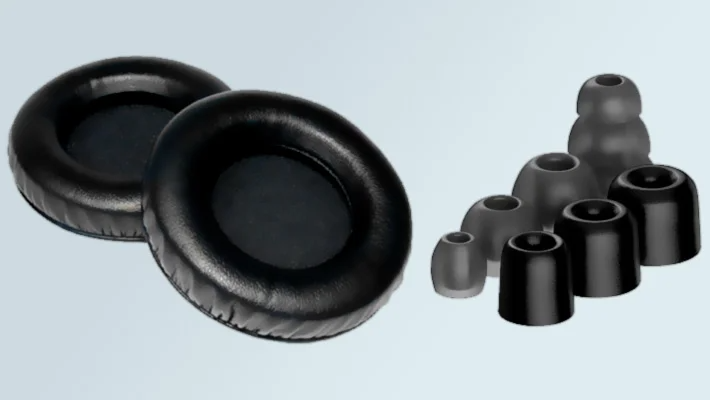
Professional work implies intensive use. Headphones are subjected to mechanical stress, temperature changes, and exposure to moisture and dust, and professional models are created with these factors in mind. Durable materials and special coatings ensure a headphone’s reliability. Many models have detachable and replaceable parts, allowing for easy replacement of worn-out components like cables and earpads.
Wired vs. Wireless Technologies
Wired headphones connect to an amplifier with a cable, and its length determines the possible distance from the source. If the cable is too short, it restricts movement; if it's too long, it becomes cumbersome, and its weight can pull on the headphones. Furthermore, a long cable's high resistance can lead to noticeable signal loss.
Wireless headphones receive a signal via a radio channel (Bluetooth or Wi-Fi) and are free from the inconveniences associated with cable weight and length. However, wireless headphones have their own weaknesses:
- Additional digital-to-analog conversions, which can noticeably affect the signal quality, especially in inexpensive systems.
- Latency (delay) that occurs during these conversions. This may not be audible in expensive professional systems, but it can be a significant limitation in more modest ones.
The advantage of wired systems is their high reliability and sound quality. The advantage of wireless systems is their freedom of movement. A good wireless system can provide a stable reception within a radius of up to 50 meters. The choice between them is often dictated by your usage conditions and budget.
We have now discussed the main characteristics of professional headphones. To summarize this section, we want to remind you once again: test the headphones before you buy them. You can read specifications a thousand times, but only by putting the headphones on will you truly know if they are right for you. In our stores, you can always listen to and compare any models that you like.
Now, let's talk in detail about the different categories of professional headphones.
Full-Size Studio Headphones
Professional studio headphones are developed to achieve an authentic and detailed sound, which is crucial for objective monitoring when working with audio. Manufacturers strive to ensure a flat frequency response and minimize distortion, allowing the listener to hear the slightest nuances of a recording: a vocalist's breath, the pluck of a string, spatial effects. These criteria define the set of characteristics to rely on when choosing studio headphones.
The acoustic design should be chosen based on the intended work:
- Open-back headphones — for listening, mixing, and mastering.
- Closed-back headphones — for monitoring during recording in the studio.
- Semi-open headphones — for listening and reviewing recorded material.
Open-back headphones have perforated earcups, which reduce resonance but don’t isolate the listener from external noise. People around you will also be aware of what you're listening to. Such headphones are not suitable for studio recording, as the sound will leak out and be picked up by the microphone.
Closed-back headphones have a sealed earcup volume. This provides a high degree of isolation from external noise and prevents sound from leaking out. They are best suited for studio recording and working in noisy environments.
Semi-open headphones combine both the advantages and disadvantages of the other two types. They are rarely used in studios, but such models can be a good choice for beginners, as they can, with some reservations, be called universal.
Key technical specifications for studio headphones:
- Sensitivity — >90 dB
- Frequency range — 20–20,000 Hz
- Impedance — >200-600 Ohms
- THD — <0.1% across the entire range
- Flat FRC
- Mechanical strength and reliability
- Compatibility with professional-standard equipment
Durability and comfort during long listening sessions are also mandatory requirements. Studio headphones should have large, soft earpads, an adjustable headband with a cushion, and a robust construction that can withstand intensive daily use. Earpads, headbands, and cables wear out over time, so these parts must be detachable and replaceable.
Examples:
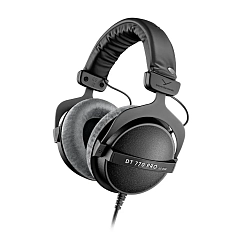


Cable type: twisted single-sided
Field of application: mastering, recording control
Max SPL, dB: 96
- Studio headphones with excellent response across the entire frequency range
- 250 Ohm impedance
- Comfortable fit due to an adjustable, cushioned headband and soft velour earpads
- One of the most reliable professional headphones, easy to service as all parts are replaceable
- Bass Reflex technology for a more spacious, "breathing" bass
- Coiled, single-sided cable made of oxygen-free copper (99.999%) with a gold-plated 3.5 mm jack
- Excellent, balanced sound across the entire frequency range
- Foldable design with a carrying case included
- Ergonomic design with a very comfortable fit
- High reliability and the ability to replace components
- Low impedance and high sensitivity; can be used with portable devices
- Coiled cable

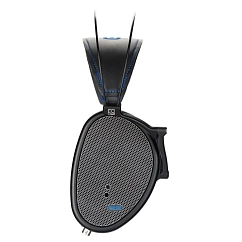

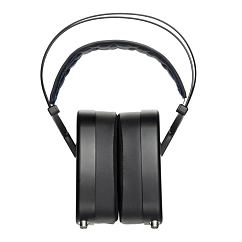
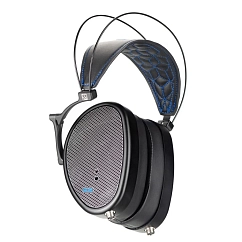
Headset type: stereo
Brand: Dan Clark Audio
Headphone type: wired
- New 5th-generation driver
- AMTS technology
- Improved planar driver performance
- New diaphragm materials combined with optimized V-Planar metal traces
- Cable with a 6.3 mm connector
- Dual-mode bass port
In-Ear Monitors (IEMs)
The main challenges of monitoring for sound engineers and musicians during live performances are high levels of ambient noise and the need for active movement on stage. In these conditions, the most important requirements for headphones are good sound isolation, accuracy and clarity of sound reproduction, and a secure, comfortable fit.
Although professional in-ear monitors look similar to regular "earbuds," they far surpass them in capabilities. Personal monitoring systems are designed for noisy environments and can reproduce sound very loudly without distortion, all while delivering it with fidelity. At the same time, the controlled sound level in the headphones protects the user's hearing from dangerous sound pressure levels.
A modern personal monitoring system consists of the monitor earpieces and a radio system (transmitter and receiver). The transmitter connects to the sound source and sends the signal to the receiver, which is clipped to the performer's clothing and connected to the earpieces via a cable. IEMs use balanced armature drivers, and there can be several in each earpiece. A dynamic driver can also be included to extend the frequency range, in which case the headphones are called hybrids.
Depending on your tasks, you can find IEMs with any FRC you need: flat, like studio headphones, or with emphasized regions if required. Can full-size headphones be used on stage? Yes, but they can look rather strange on a vocalist during a performance. They also severely restrict movement. It's no surprise that in-ear monitors have long since displaced their full-size competitors from the stage, as while offering high-quality sound, IEMs are very compact and practically invisible.
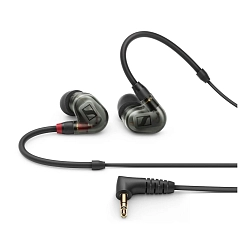
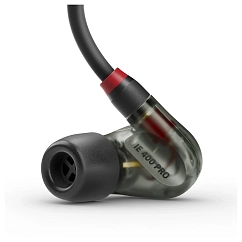
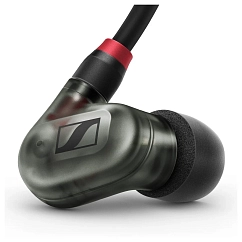
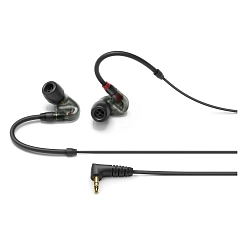
Examples:
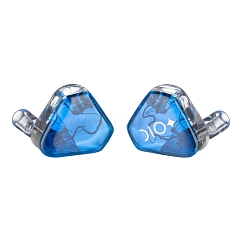
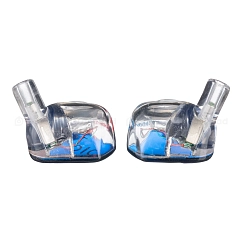
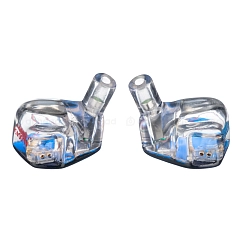
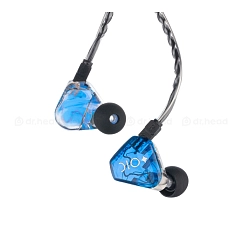
Connector shape: L-shaped
Earpads material: silicone
Headphone type: wired
- 1 full-range balanced armature driver
- Frequency range: 20 – 22,000 Hz
- Sensitivity: 139 dB
- Impedance: 8.9 Ohms (@ 1 kHz)
- DC resistance: 3.6 Ohms
- Cable length: 1.2 m
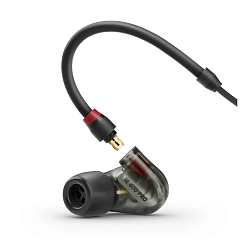
Earpads material: silicone
Headphone type: wired
Kind of headphones: in-ear
- New 7mm dynamic driver provides powerful, high-quality monitor sound
- Tangible bass, clear midrange reproduction, and clean high frequencies
- TrueResponse driver system prevents acoustic stress
- High level of comfort and a snug fit
- Excellent shielding due to an optimized earpiece shape and silicone/foam eartips
- Cable is suitable for stage use thanks to an innovative internal channel

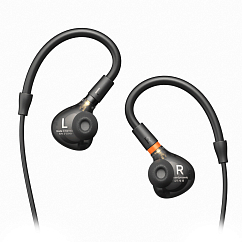

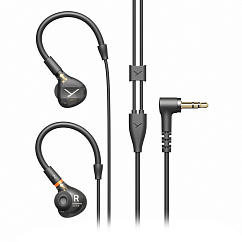
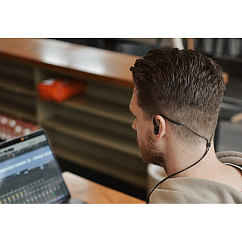
Brand: Beyerdynamic
Headphone type: wired
The lowest frequency, Hz: 5
- Optimized sound for guitarists and vocalists
- TESLA.11 drivers provide a compact and high-quality sound
- Noise reduction up to -39 dB
- 16 Ohm impedance ensures compatibility with any audio device
- IP68 certified weather protection
- Maximum reproducible frequency of 40 kHz
Custom In-Ear Monitors (CIEMs)
The main difference between custom professional headphones and mass-produced ones is that they are manufactured for a specific user based on impressions of their ears. While universal headphones block the ear canal only along the contour of a standard silicone or foam tip, CIEMs distribute pressure over the entire surface, perfectly matching the contours of your ears. This ideal fit provides the best possible isolation from external noise.
The fit and security of CIEMs are incredibly reliable; accidental slippage is virtually impossible, not only due to the custom fit but also the presence of an ear hook. Which only makes sense since such an incident can pull a performer out of the right emotional state, spoiling the performance.
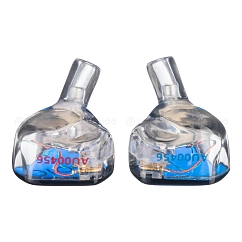
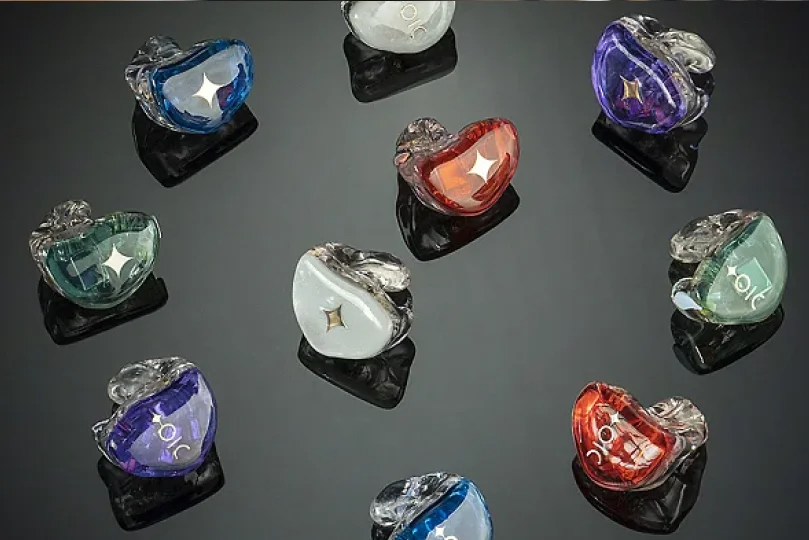
Another great feature of the CIEMs is the ability to choose a design that perfectly matches your image. You can select the color and material, make the earpieces translucent, or adorn them with a custom graphic. In addition to appearance, you can also customize the sound character by selecting the number and type of drivers, as well as the shape of the internal acoustic chamber. Thus, you get a personalized tool created in exact accordance with your wishes.
Examples:
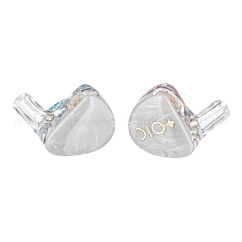


Connector shape: L-shaped
Earpads material: silicone
Headphone type: wired
- 4 drivers in each earpiece
- Frequency range: 20 – 24,000 Hz
- Sensitivity: 141 dB
- Impedance: 30.6 Ohms (@ 1 kHz)
- DC resistance: 35 Ohms
- Cable length: 1.2 m
Gaming Headphones
The sound quality requirements for gaming headphones are truly specific — they would be completely unsuitable for studio work, for example. But don’t be surprised by us including this section: when we talk about professionalism, one only needs to recall the grand tournaments with million-dollar prizes to understand that a professional gamer, for whom gaming is a lifestyle and a source of income, needs serious equipment.
A microphone is a mandatory element in any gaming headphones — specifically, a cardioid microphone with good noise cancellation — since it’s needed for communication. Unlike studio models, gaming headphones often feature a V-shaped FRC, where the bass and treble are artificially boosted, which creates a spacious soundstage, emphasizing spatial effects.
For professional use, wired models are preferable as they are free from sound delay issues. If wireless models are necessary, look for options with a latency of no more than 15 ms. Also, pay attention to battery life — it should be substantial — and the materials: during multi-hour gaming sessions, ears shouldn't sweat much, so breathability, ventilation, and cooling effects are a big plus.
Examples:
- 360 Spatial Sound technology
- Dual sensor for active noise cancellation
- Discord certified
- Simultaneous connection via Bluetooth and 2.4 GHz using a USB transmitter
- Up to 32 hours of battery life with a fast charging function
- Swivel microphone with voice focus
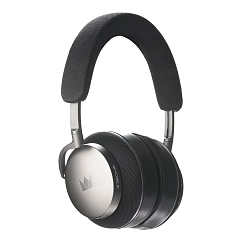

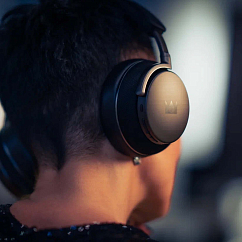
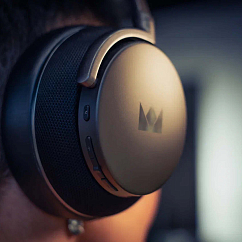
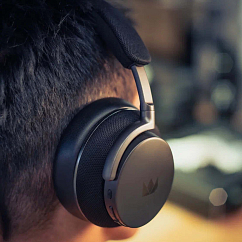
Detachable microphone: yes
Multipoint: yes
Headset type: stereo
- Patented world-first dual-driver hybrid system
- Bluetooth 5.3 with multipoint and hybrid noise cancellation
- Lossless sound with LDAC, aptX HD, aptX, and AAC
- Premium aluminum frame and earpads made of Korean synthetic leather with memory foam
- Up to 80 hours of playback with ANC off and up to 60 hours with ANC on
- Detachable microphone
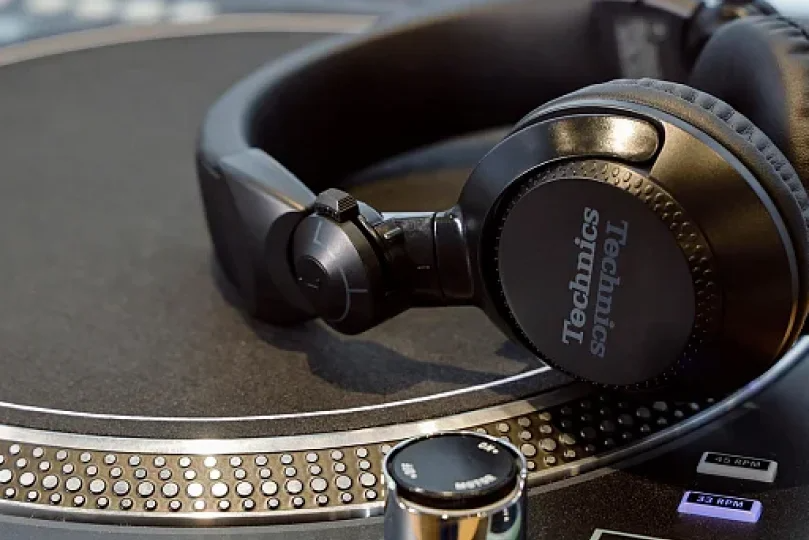
DJ Headphones
The primary requirement for DJ headphones is excellent sound isolation, as they work in very loud environments. That’s why DJs most often choose full-size closed-back headphones. But CIEMs can also be a viable option, providing both superb sound isolation and comfort during long sets.
The main difference between DJ and studio headphones is that the former must sound louder in a noisy environment. The power rating for such headphones starts at an average of 300 mW and can even reach 3000–3500 mW.
The average impedance for all DJ headphones is 30–90 Ohms. This means they won't need an additional amplifier and will all sound sufficiently loud when connected not only to a mixer but also to a laptop or even a smartphone. A lightweight construction is always a plus here. Many DJ models allow one earcup to be swiveled away to listen to the room with one ear, but otherwise, the earpads must fit snugly. The cables are usually detachable and durable, about 2–3 meters in length.
Examples:
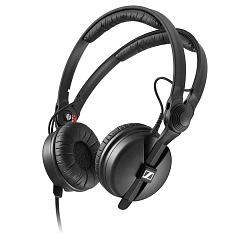
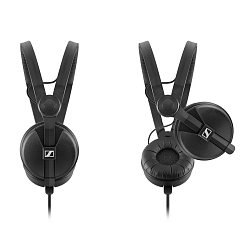
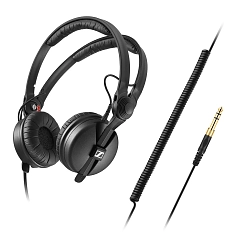
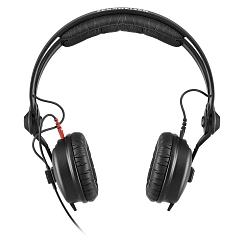
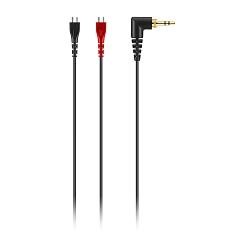
Case included: yes
Color shade: black
Connector shape: straight
- Studio-level sound
- Excellent external noise suppression
- Neodymium magnets and extremely lightweight copper-aluminum voice coils
- Very lightweight and comfortable, even during extended use
- Earcup rotates 90° for single-ear monitoring
- Exceptional reliability, all components are replaceable
Final Advice
Choosing professional headphones is a process that requires a thoughtful approach and an understanding of your own needs. The professional application plays a key role. For sound engineers, accuracy and a flat FRC are crucial. Musicians need good noise isolation and clarity. DJs require reliability and high volume, while gamers value spatial sound and comfort.
A comprehensive approach to choosing headphones includes:
- Defining your goals
- Analyzing professional requirements
- Checking technical specifications
- Ensuring comfort and convenience
- Testing the sound
And remember: no reviews or stated technical characteristics can replace personal listening. It’s essential to test the headphones in conditions as close as possible to your working environment to evaluate their comfort and check the sound quality on different types of content.
Professional headphones are a tool that should serve you faithfully for many years, so you shouldn't rush your choice. In Dr.Head’s Dubai showroom, you can try different models and listen to your own feelings. We’ll be happy to help you pick the best headphones for the job!