
































Dolby Digital vs. DTS: What to Pick for Your Home Cinema

Walk into any electronics store, and you will see two logos plastered on every receiver and soundbar: Dolby and DTS.
They both promise "surround sound," but they achieve it in different ways. Is one better than the other? And does your equipment even support the difference?
To build the perfect home theater, you need to understand the war between these two audio giants. Let’s break down the tech, the specs, and the sound.
Contents
The Basics: What is Surround Sound?
Surround sound is about immersion. Instead of two speakers in front of you (aka Stereo), you have speakers behind, beside, and sometimes even above you.
Dolby and DTS are essentially "compression containers." They pack all these audio channels into a single digital file so your cable can send it from the TV to the speakers.
What Do the Numbers Mean?
You’ll see numbers like 5.1 or 7.1 when it comes to surround sound — here’s a brief cheatsheet to decypher them:
- The first number (5 or 7) is the count of standard speakers.
- The ".1" is the Subwoofer — if we’re talking bass for the setup.
Dolby Digital

Created in the early 90s, Dolby Digital is the most recognized name in audio. It works by compressing audio data to keep files small, making it perfect for DVDs and early streaming.
Key Versions:
- Dolby Digital: The classic 5.1 format with a max bitrate of 640 kbps.
- Dolby Digital Plus:Higher quality (up to 7.1 channels), used by Netflix and Amazon Prime.
- Dolby Atmos: The modern king. It adds "height" channels, aka ceiling speakers. Instead of assigning sound to a specific speaker, it treats sound as "objects" moving in 3D space.
You can find Dolby everywhere, from Netflix to budget soundbars.
DTS

DTS (Digital Theater Systems) arrived on the scene in 1993 as a direct competitor to Dolby, famously debuting with Jurassic Park. DTS focuses on higher bitrates and less compression.
Key Versions:
- DTS Digital Surround: The standard 5.1 version.
- DTS-HD Master Audio: Lossless audio, identical to the studio master. Common on Blu-rays.
- DTS:X: The great rival to Dolby Atmos. It also creates 3D object-based audio, but doesn't strictly require ceiling speakers to work, as it’s more flexible with speaker placement.
DTS is most often found in Blu-ray discs, high-end gaming, and premium AV receivers.
The Main Difference: Bitrate & Compression
Think of the audio signal like water flowing through a pipe.
- Dolby Digital is a standard garden hose. It compresses the water to make it fit efficiently. A weird metaphor, admittedly, but you catch the drift. Dolby has a bitrate of ~640 kbps.
- DTS is a fire hose. It uses a much wider pipe, allowing more water — data — to flow through with less "squeezing." Its bitrate is ultimately superior: from ~754 kbps to 1.5 Mbps.
Does it matter?
Technically, DTS offers higher potential audio quality because it throws less data away. However, Dolby's compression algorithms are incredibly efficient. To the average ear on a standard soundbar, they sound very similar. But on a high-end system, the difference in clarity and dynamic range becomes noticeable.
Cheat Sheet: Comparison Table
| Feature | Dolby Digital | DTS |
| Compatibility | Universal (TVs, Streaming, DVD) | Selective (Blu-ray, Premium Gear) |
| Max Bitrate | 640 kbps | 1.5 Mbps (High Res) |
| Compression | Higher (More efficient) | Lower (More detail) |
| 3D Audio | Dolby Atmos | DTS:X |
| Best For | Streaming services | Physical Media (Blu-ray) |
How to Check Your Gear
Do not just assume your TV supports DTS!
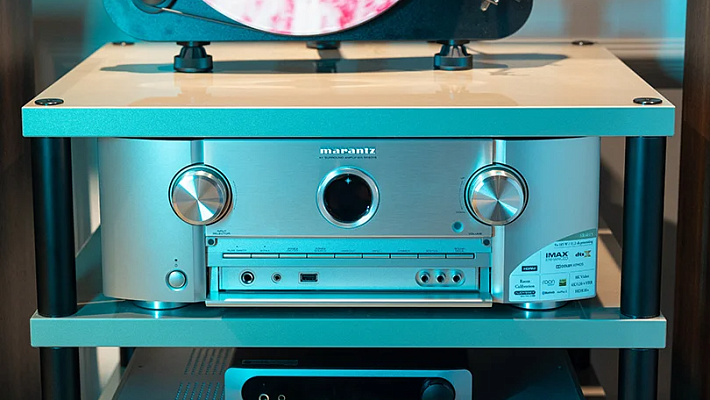
While almost all TVs support Dolby, many modern TVs — including some LG and Samsung models — have dropped DTS support entirely to save on licensing fees.
Here’s how to know for sure:
- Check the Logo: Look for the DTS logo on your soundbar or receiver box.
- Check the Settings: Go to your TV’s Audio Output settings. If "DTS" or "DTS Neo" is grayed out, your TV cannot pass that signal.
- The Result: If you play a DTS movie on a non-DTS TV, you will get silence, or the player will downgrade the audio to basic Stereo.
The Verdict
Now that we know more about Dolby and DTS, you must be wondering, which one ultimately wins? As per usual, the answer depends on what you’re looking for.
- For Streaming (Netflix/Disney+):Dolby wins, no doubt. It is the standard for online content.
- For Physical Media (4K Blu-ray):DTS wins for pure audio fidelity, which is noticeable on high-end gear.
Ideally, your home cinema should support both.
If you want to hear the difference between a compressed stream and full-fat DTS-HD Master Audio, come visit the Dr.Head showroom in Dubai. Whatever your goal, we’ll find you the best audio equipment for it.