

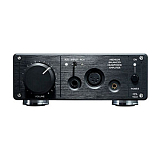
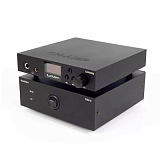



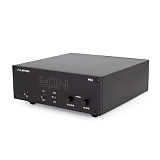













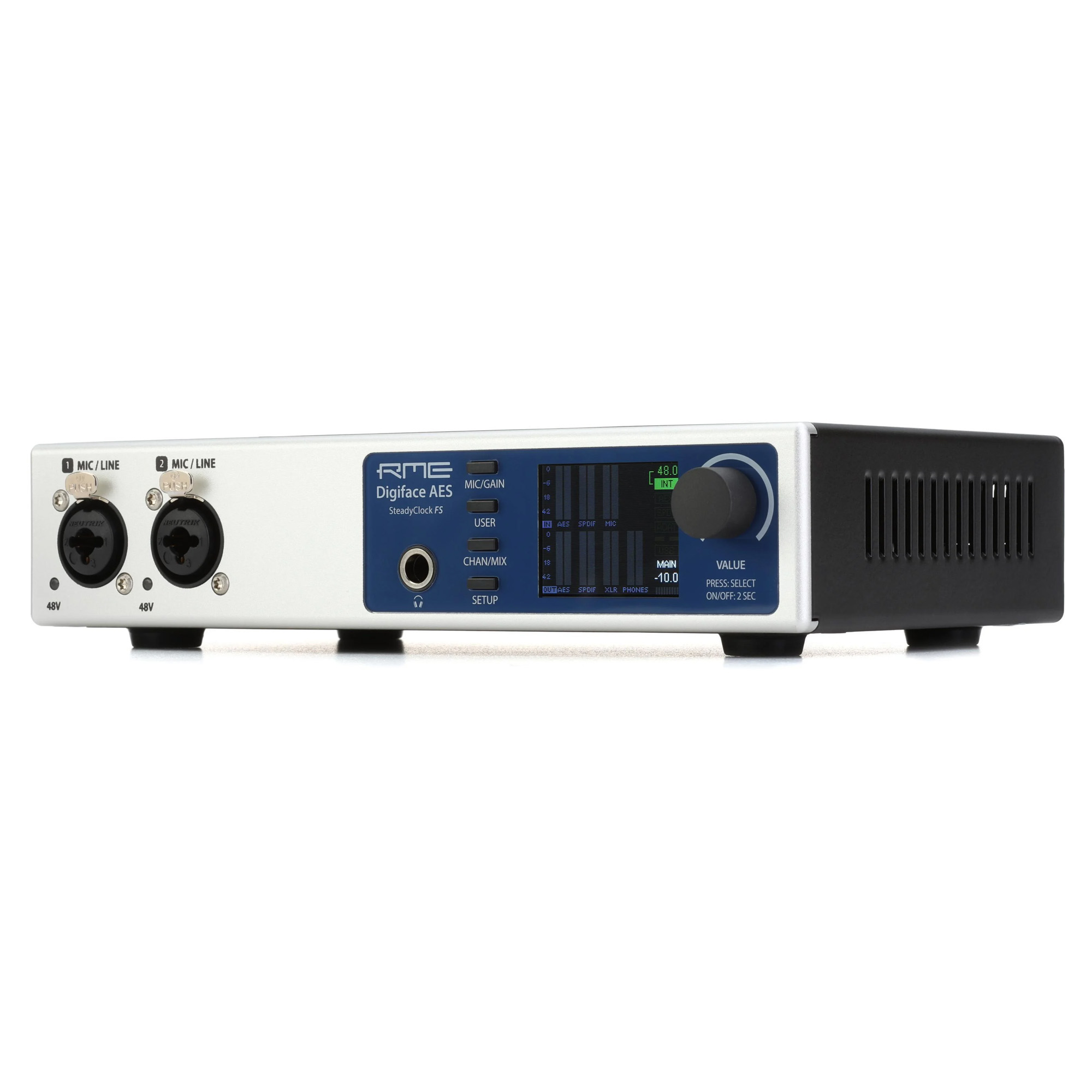
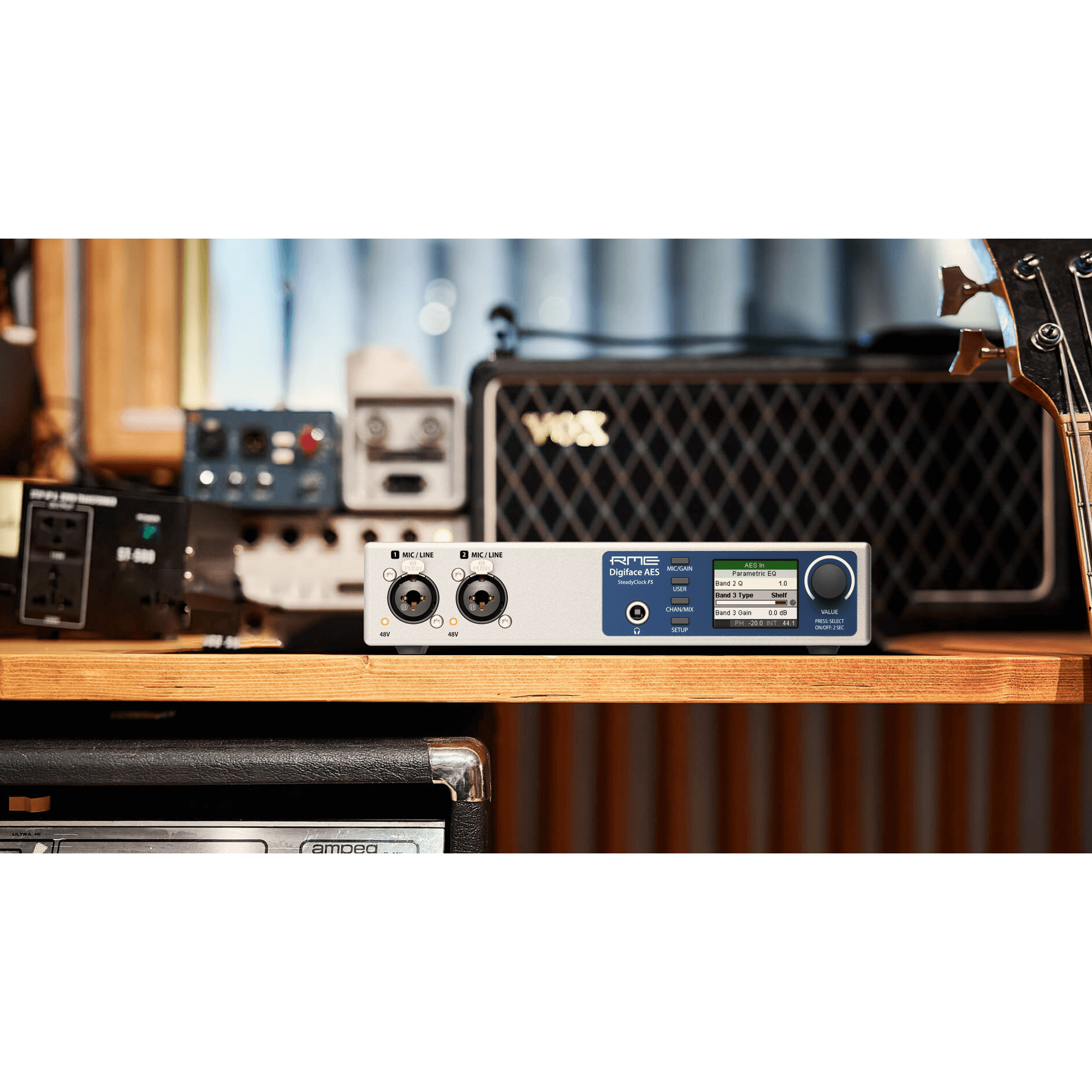

The RME Digiface AES audio interface stands out as a device designed for the most demanding tasks. This professional audio interface, developed by the German company RME, combines advanced technologies, extensive digital and analog connection capabilities, as well as standalone operation, making it an ideal choice for studio and home use. If you are looking to buy an audio interface capable of providing uncompromising sound quality and versatility, RME Digiface AES from the Music City online store will be your reliable partner. Let's delve into why this audio interface deserves your attention, and how its features will help you bring your creative ideas to life.
Sparks of Genius: Technical Excellence and SteadyClock FS
Precision and sound stability are the cornerstone of any high-class audio interface, and the RME Digiface AES sets new standards in this area thanks to the SteadyClock FS technology. This synchronization system, based on high-precision quartz generators, reduces jitter to the femtosecond level (10^-15 seconds), eliminating phase distortions that can affect signal purity. For studio audio interfaces, such technology is crucial as it ensures perfect synchronization of all digital sources, whether AES/EBU, ADAT, or S/PDIF. This means you get artifact-free sound, with precise reproduction of every nuance of the recording.
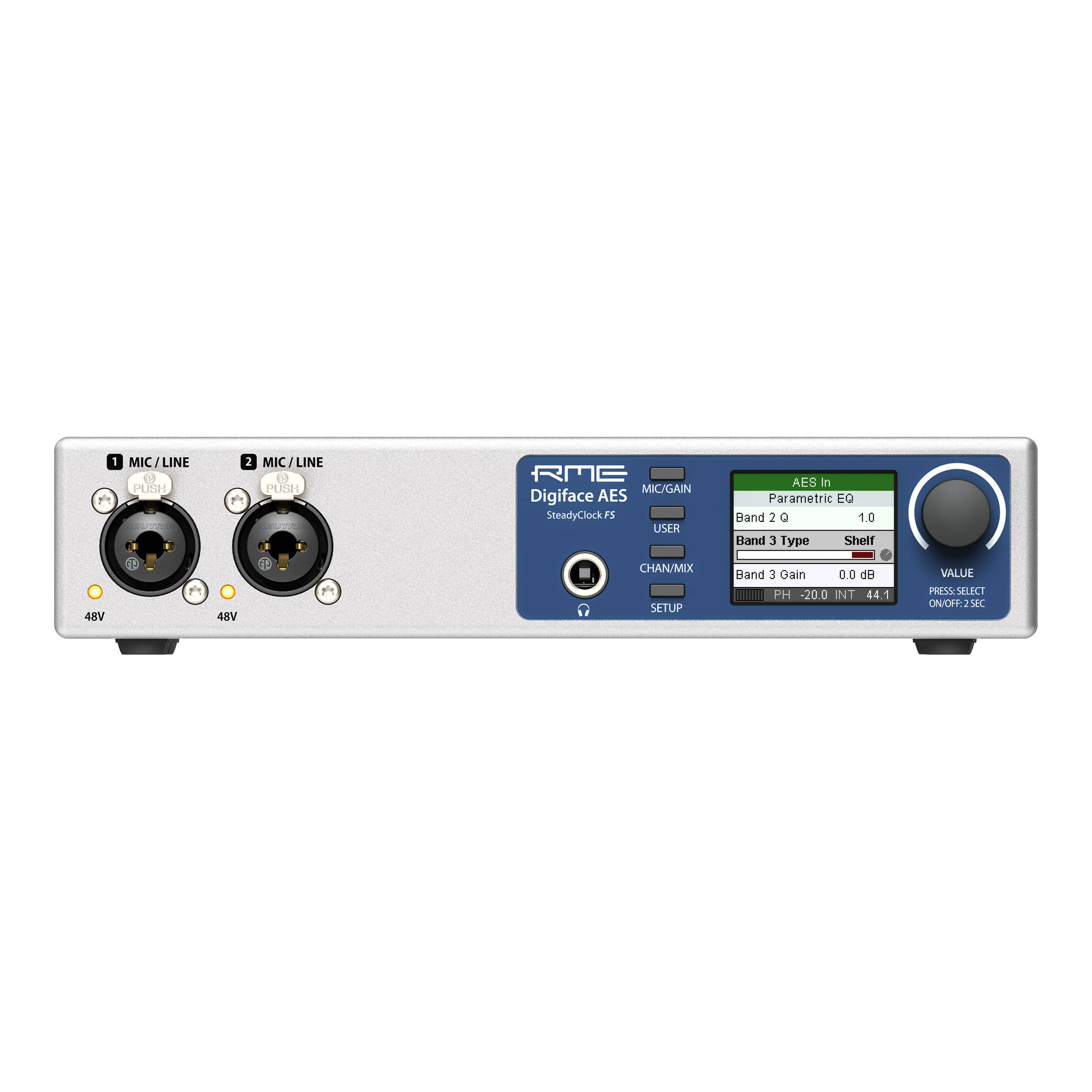
The device supports a sampling frequency of up to 192 kHz with a bit depth of 24 bits, guaranteeing high sound detail. Two microphone-line inputs with combined XLR/TRS connectors on the front panel are equipped with preamplifiers that provide amplification up to 75 dB with 1 dB step adjustment. Each input supports individually switchable 48V phantom power, making them suitable for working with high-class condenser microphones. The presence of relay PAD and overload protection allows you to connect even the most sensitive microphones without the risk of distortion. These features make the RME Digiface AES the perfect audio interface for recording, where maximum clarity and dynamic range are required.
Connectivity
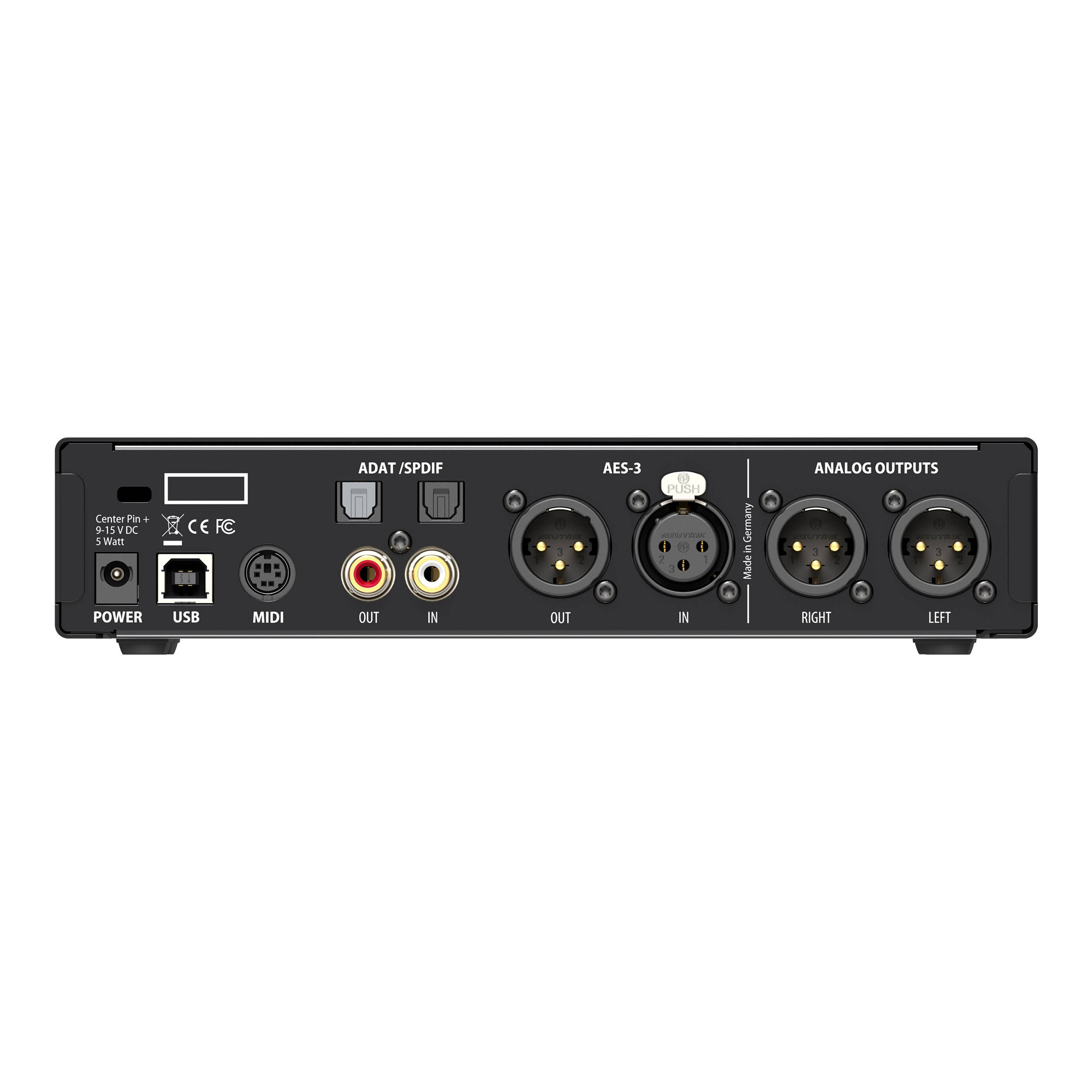
The digital section of the device is no less impressive. On the back panel, there are AES/EBU inputs and outputs (XLR), coaxial and optical S/PDIF, as well as two Toslink ports that can operate in ADAT mode (up to 8 channels per port) or optical S/PDIF. This provides up to 14 input and 16 output channels, allowing you to integrate the Digiface AES into complex studio systems. A built-in sample rate converter (SRC) for one of the three digital inputs (AES, S/PDIF, or ADAT) solves desynchronization issues, allowing you to simultaneously use sources with different frequencies. For example, you can synchronize the device via AES, while using S/PDIF for independent monitoring. For those looking for an audio interface for a home studio, this flexibility simplifies working with a variety of equipment.
The analog-to-digital converter dynamic range is approximately 114 dB (A-weighted), and the digital-to-analog converter is 119.8 dB, ensuring exceptional sound transparency. This is particularly important for audiophiles and sound engineers working on mastering or high-quality recordings. The compact housing (half-rack width, 1U height) and the ability to power via USB 2.0 make the device portable, and an optional 9-15V power adapter adds reliability for long sessions. If you want to buy an audio interface in Moscow that combines portability and professional capabilities, the Digiface AES is your choice.
Intuitive Control and Standalone Operation
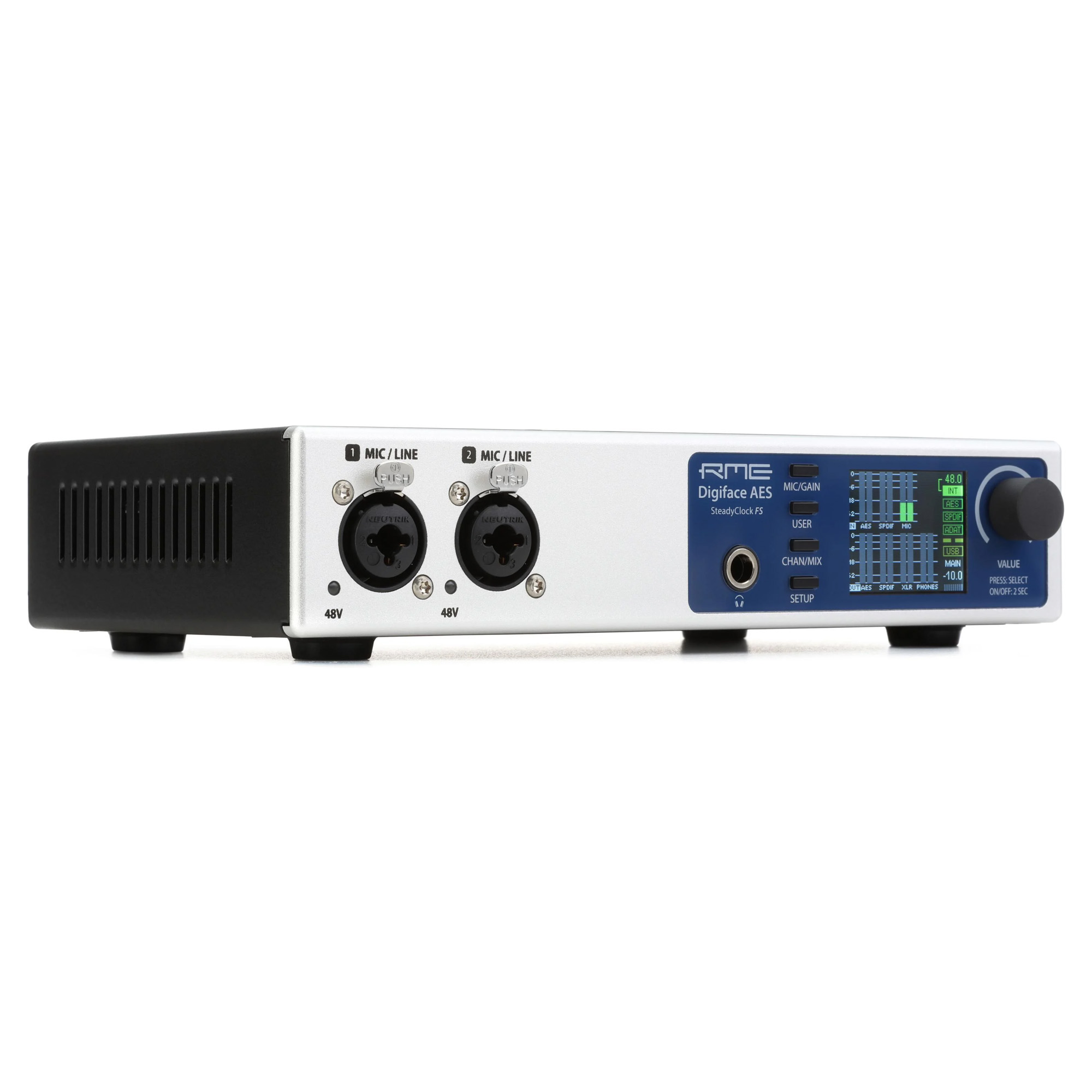
Ease of operation is an important aspect of any sound audio interface, and the RME Digiface AES is meticulously designed. The front panel features a high-resolution color display that shows signal levels, equalizer settings, synchronization status, and other parameters. Four functional buttons and a smooth encoder provide quick access to settings, and a well-thought-out menu structure makes device configuration intuitive even for beginners. This approach allows you to focus on creativity rather than technical complexities.
One of the unique features is the ability to save up to six different configurations in the device's internal memory. This allows you to instantly switch between settings for different scenarios — for example, between studio recording, live performance, or standalone operation. In standalone mode, the Digiface AES can function as a format converter (for example, AES to ADAT) or signal router without connecting to a computer. This makes it indispensable for situations where reliability is required regardless of the PC, such as concerts or broadcasting studios.
Remote control compatibility is provided with TotalMix FX software, which provides full control over routing and mixing. TotalMix Remote allows you to control the device from iOS, Mac, or PC, convenient for sound adjustment from another room or during studio work. The DIGICheck program included offers tools for analyzing audio signals, such as a spectral analyzer and peak meter, which is especially useful for precise system tuning. The mini-DIN MIDI port (cable included) adds the possibility of integration with external controllers, expanding the device's functionality.
Analog outputs include two balanced XLR outputs on the back panel for connecting active monitors or amplifiers, as well as a headphone stereo output (6.3mm TRS) on the front panel. The headphone output provides enough power to work with high and low impedance models, ensuring quality monitoring. If you are looking for studio audio interfaces with standalone capability and flexible control, the RME Digiface AES offers solutions that will satisfy even the most demanding requirements.
TotalMix FX: Mixing and Monitoring Flexibility
The TotalMix FX software is the heart of the RME Digiface AES, providing unparalleled flexibility in sound routing and processing. This real-time digital mixer allows you to independently route each input and playback channel to any physical output, creating up to 30 independent stereo submixes. This functionality is essential for recording audio interfaces where complex routing is required, such as sending different mixes to musicians' headphones or the engineer's monitors.
The built-in DSP processor adds signal processing capabilities, including a 3-band parametric equalizer, low-frequency filter, and automatic level adjustment. These tools allow you to fine-tune the sound at the monitoring stage, minimizing the need for external plugins. The Control Room section in TotalMix FX offers advanced monitoring features such as switching between sources, dimming, and volume control, making studio work more comfortable.
For those working in multi-channel systems, the Digiface AES supports simultaneous use of all inputs and outputs, including analog, AES/EBU, ADAT, and S/PDIF. This allows, for example, recording vocals through microphone inputs, simultaneously receiving a digital signal from an external converter via ADAT, and sending the mix to headphones and monitors. This versatility makes the device suitable for professional studios as well as home setups where integration with Hi-Fi equipment is required.
MIDI control support via TotalMix FX allows you to assign commands to external controllers, such as RME ARC USB, simplifying real-time adjustments. Compatibility with macOS, Windows, and iOS (in Class Compliant mode) ensures seamless operation on different platforms. For audiophiles and sound engineers looking for an audio interface for a home studio with powerful mixing capabilities, TotalMix FX provides tools that were previously only available in expensive consoles.
Package includes:
- Audio Interface
- USB Cable
- Midi Cable
- Power Adapter
- Manual